
Walk-In Collection Intake and Chain of Custody
LEDGER · August 9, 2026
Separate ownership from evaluation
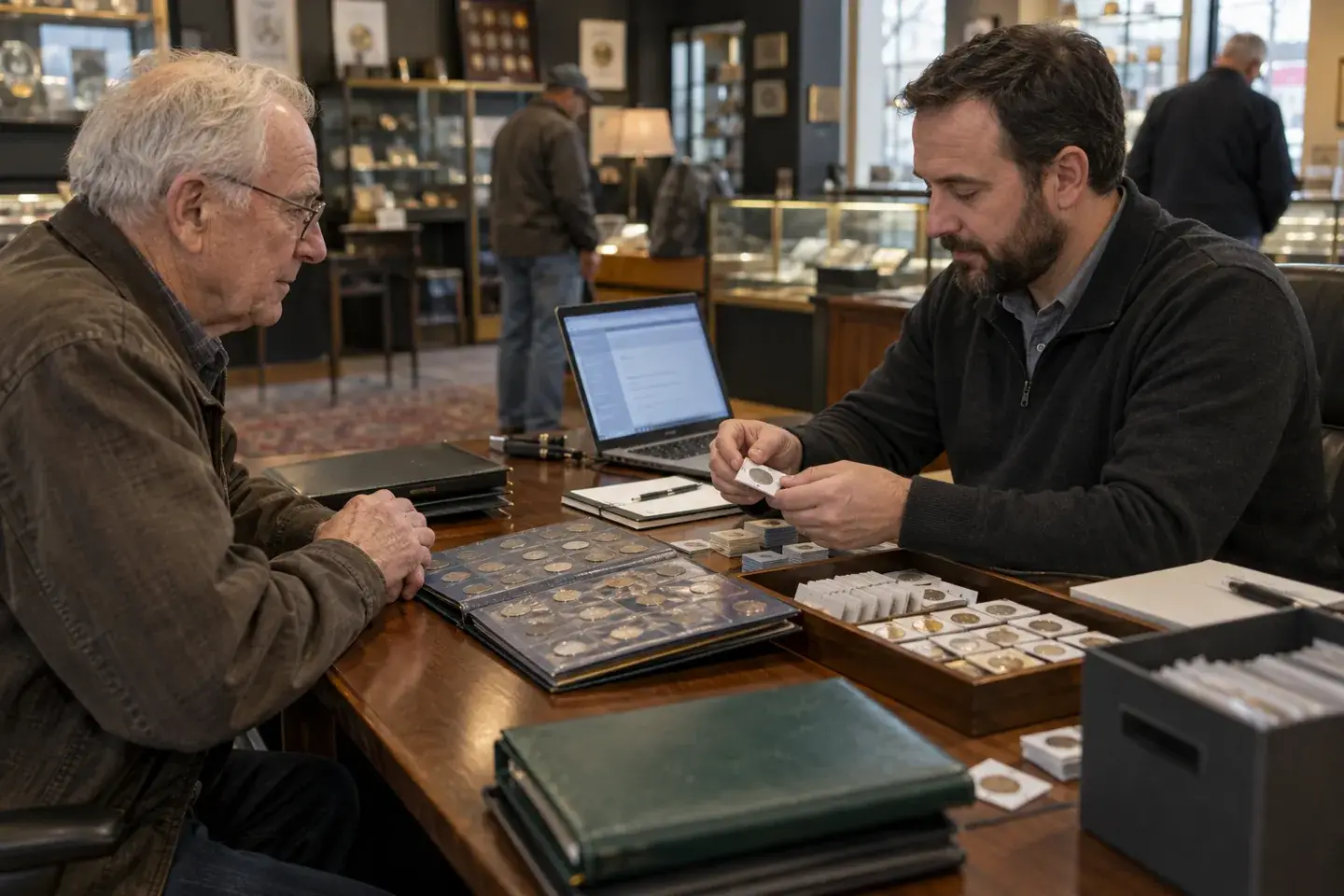
Material placed on the counter is not automatically dealership inventory. Until a purchase is accepted and documented, it may remain customer property. Your process should distinguish received-for-review, under evaluation, offer made, declined, purchased, returned, and exception states.
This protects the customer and the shop. Staff can see what the business owns, what it is temporarily holding, and who is responsible for the next physical action.
Open one intake record before sorting
Create or identify the client record and assign a unique intake or transaction reference. Record the intake time, receiving employee, general description, container count, and any visible condition concerns before the collection is distributed across trays or workstations.
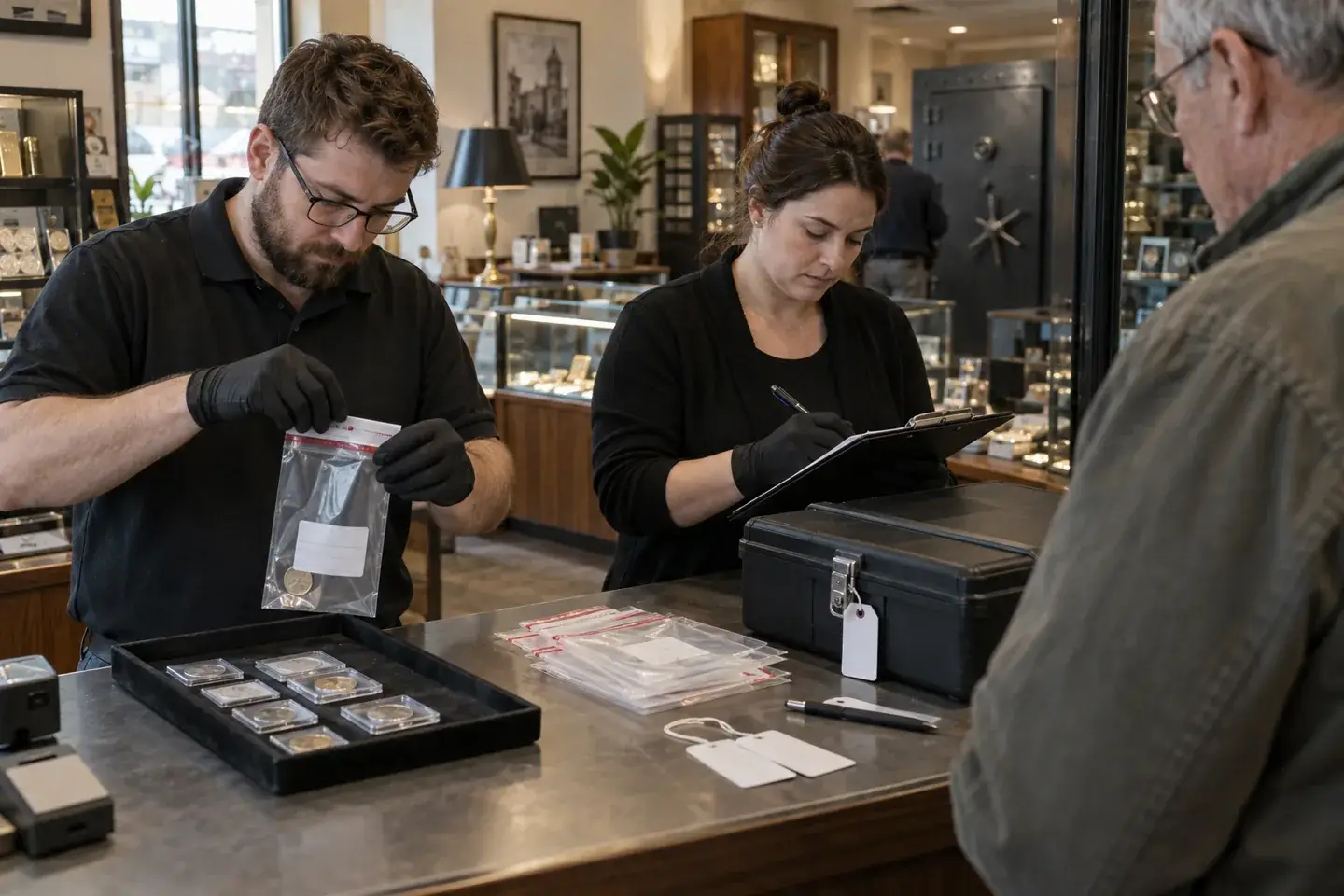
- Use numbered bags, trays, or containers when the collection spans multiple groups.
- Photograph packaging or seals when appropriate under the shop’s policy.
- Do not write unnecessary sensitive identity or payment information into general notes.
- Tell the customer what the receipt acknowledges and what remains subject to evaluation.
Control every handoff
A chain-of-custody record should answer four questions: what moved, from whom, to whom, and when. For higher-risk material, it should also show the destination, seal or container reference, and the reason for the movement.
Use individual staff accounts. Shared logins make it impossible to distinguish a genuine handoff from an action performed under someone else’s credentials. When staffing permits, use two-person verification for high-value transfers, vault receipt, or final return.
Custody is not a room. It is the sequence of accountable handoffs between rooms, people, and decisions.
Evaluate without losing the original record
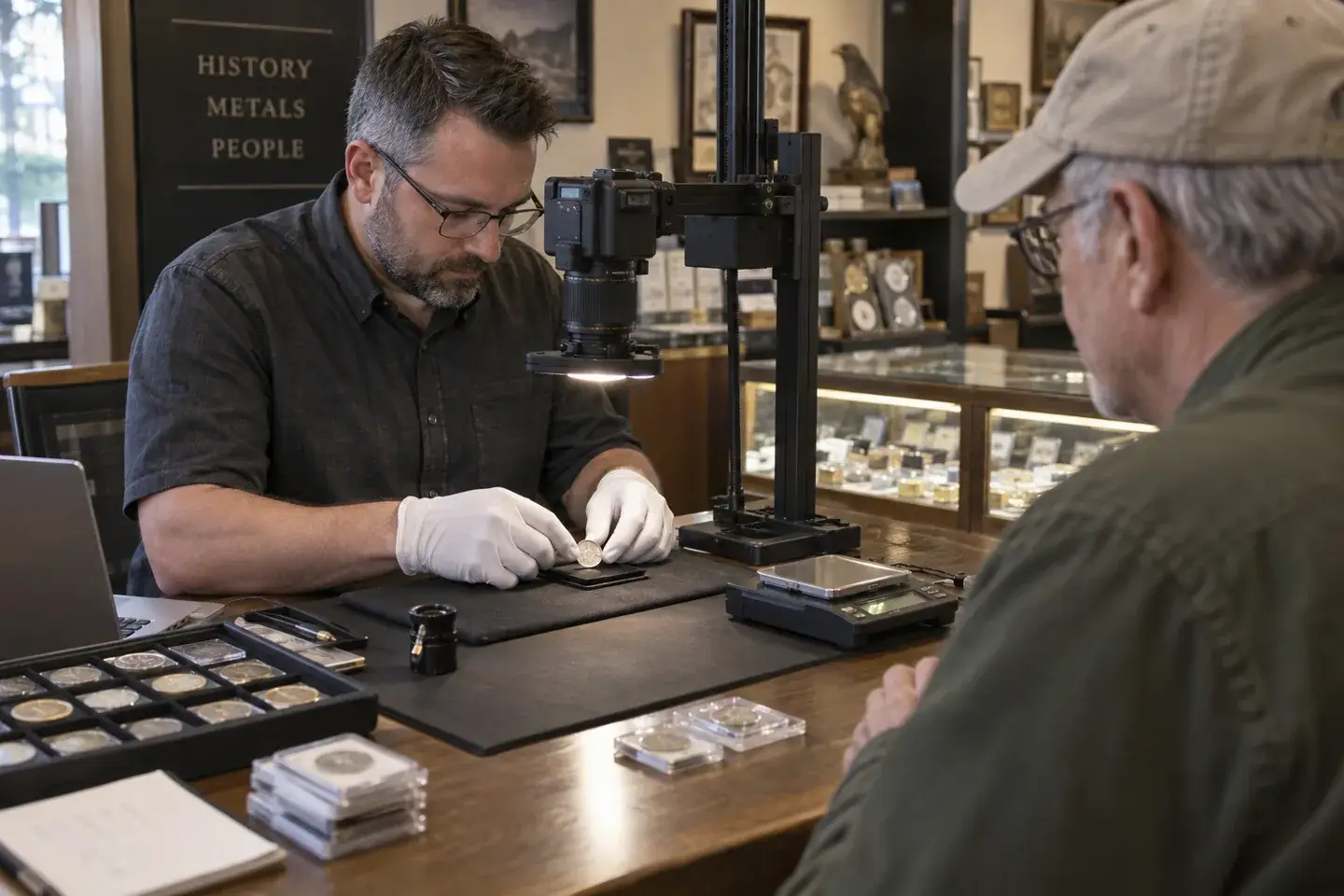
As staff identify items, connect them to exact product or category records where possible. Preserve weight, purity, count, condition, packaging, testing notes, and the price basis that supported the offer.
When live spot and premium rules are part of the price decision, record the relevant timestamp and any manual exception. If an item is uncertain, counterfeit-suspected, damaged, or outside policy, move it into a defined review state instead of forcing it into a standard product record.
Close every possible outcome
Purchased
Complete the buy transaction and required documentation, record payment, and move each item into the correct owned-inventory, pending-verification, cage, vault, refining, or other policy-defined state.
Declined or returned
Record that the offer was declined or the shop passed, then document the physical return. Obtain the required acknowledgement and close the temporary-custody record.
Partial purchase
Split the purchased and returned items explicitly. Do not leave the intake record implying that the entire collection followed one outcome.
Pending decision
Assign the next owner, storage location, due date, customer communication, and approval needed. Open-ended “hold” statuses are where customer-property problems accumulate.
Reconcile customer property daily
At close, produce or review the list of open intake and customer-property records. Match each record to a physical container and assigned location. Escalate a missing or mismatched item immediately; do not let it blend into general inventory adjustments.
A mature intake process creates faster counter work because staff no longer have to reconstruct who touched what. It also gives management a clearer view of pending offers, unresolved reviews, and aging customer property.