
Post-Show Reconciliation for Coin Dealers
LEDGER · August 9, 2026
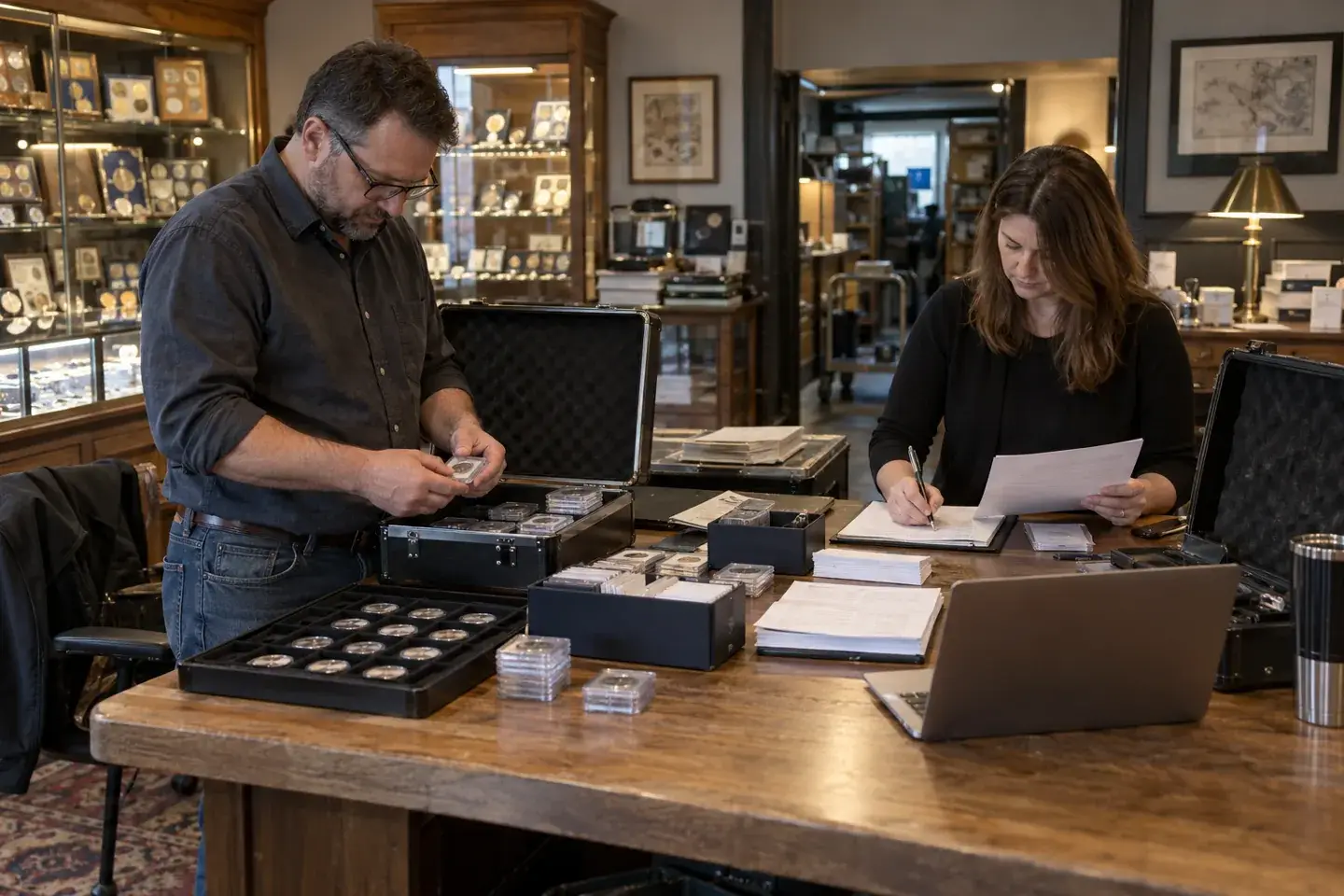
Close at the venue before you pack
Perform a daily close and a final event close while the team, records, and physical inventory are still together. Count cash, checks, card activity, recorded buys and sells, refunds, deposits, and outstanding payment status. Compare physical inventory to the show location before sealing containers.
If a variance exists, isolate it immediately. Waiting until the shop reopens adds new movements and makes the cause harder to see.
Preserve transport custody
Record who packed, verified, transported, and received each container. Keep customer property, purchased-but-pending-review items, sell inventory, cash, checks, documents, and personal items separated.
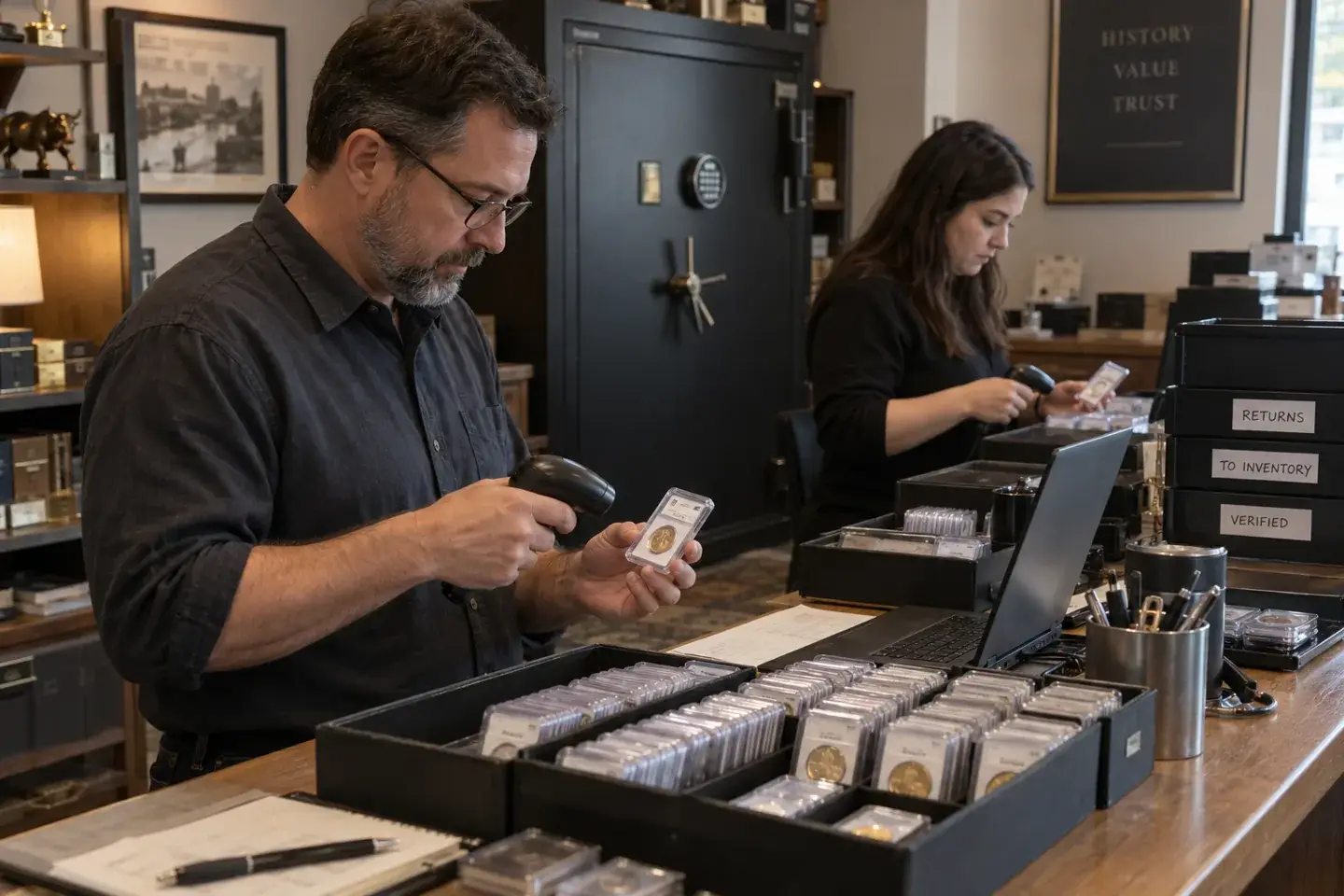
The return manifest should identify container references and the expected operating destination. Do not let a sealed case become a black box that is opened at an unassigned desk the next morning.
Receive the event back into the shop
On return, receive and recount the show location before normal transfers or sales resume. Compare the physical pieces to the final event record and resolve or formally assign every exception.
- Move unsold inventory back to its approved location.
- Route show purchases through verification, intake, cage, vault, refining, or other required states.
- Confirm customer-property returns and pending obligations.
- Separate items awaiting shipment, pickup, photography, grading, or appraisal.
- Close transport custody only after the receiving employee verifies the handoff.
Reconcile payments and documents
Match each completed transaction to its payment evidence and physical outcome. Review cash, checks, card batches, electronic payments, refunds, credits, deposits, and open balances. Confirm that invoices and receipts are attached to the correct client and items.
Watch for common show exceptions: a card authorization that did not settle, a check without a complete reference, a handwritten fallback ticket not yet entered, a manual price override without approval, or a buy recorded with the wrong payment direction.
Turn lead notes into assigned work
A stack of business cards is not a follow-up system. Enter qualified contacts with the event source, area of interest, permission status, specific next action, owner, and due date.
Separate operational commitments from marketing. A promised quote, appraisal update, product search, shipment, or dealer call needs follow-up even if the person did not consent to general product email. Marketing permission should never be assumed from a conversation.
Complete the accounting and operations review
Post or verify the accounting outcomes for buys, sells, payments, fees, refunds, inventory movement, and any approved adjustments. Keep unresolved variances in an exception list with evidence, an owner, and a deadline.
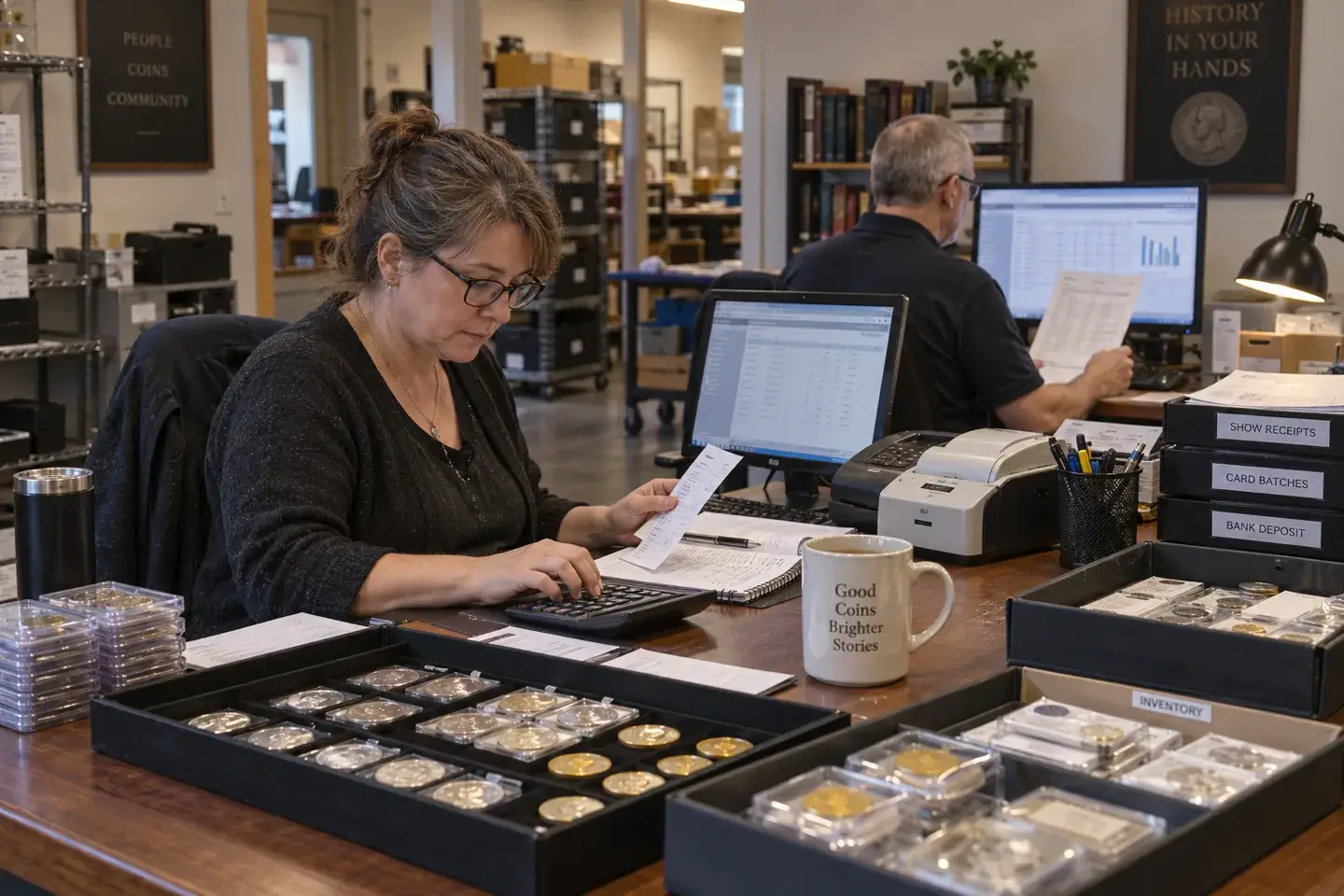
Within two business days, run a short debrief:
- Which products and price rules required the most exceptions?
- Which inventory or custody steps slowed the table?
- Where did devices, connectivity, labels, or permissions fail?
- Which leads and commitments remain open?
- What must change before the next event?
Measure the process, not a vanity total
Revenue alone will not show whether the event was operationally sound. Review completed and open transactions, gross margin where available, inventory variances, unresolved payments, custody exceptions, time to final reconciliation, qualified leads, and follow-up completion.
The best result is a show location that returns to zero with every dollar, item, document, and promise accounted for.