
Preparing Inventory and Price Rules Before a Coin Show
LEDGER · August 9, 2026
Treat the show as a temporary location
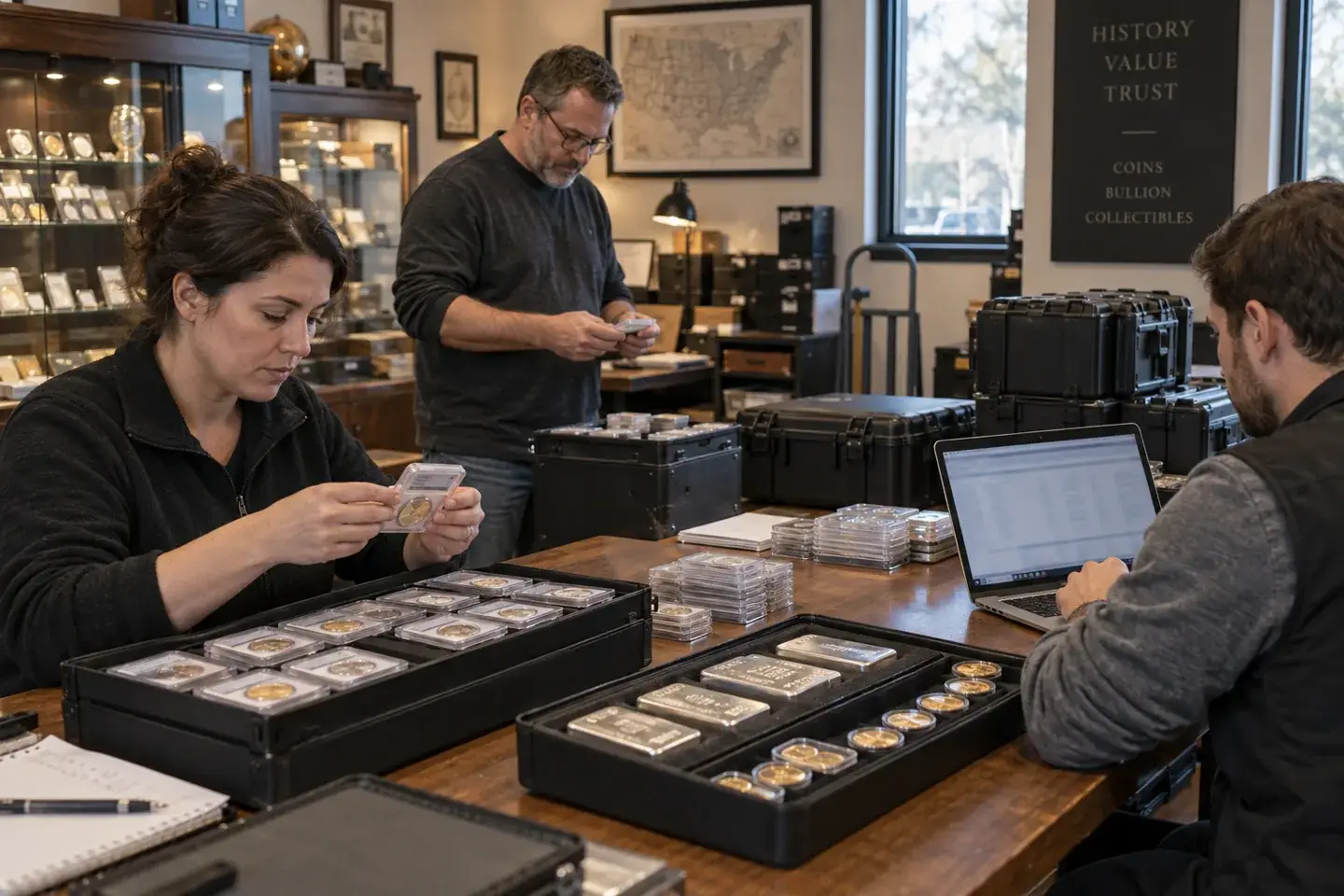
Create a show-specific location, bin, or custody designation before packing. Transfer selected inventory into that location in the operating record and verify the physical pieces against it.
This creates a clean boundary. Staff can see what traveled, what remained in the shop, what sold, what was purchased, and what must return. Without that boundary, show activity gets mixed into general on-hand quantities and reconciliation becomes a search.
Select exact pieces, not broad value estimates
Build the sell manifest from product and physical inventory records. Confirm SKU, barcode, metal, form, weight, packaging or certification, quantity, and condition where relevant. High-value or unique pieces may need an individual reference rather than a pooled quantity.
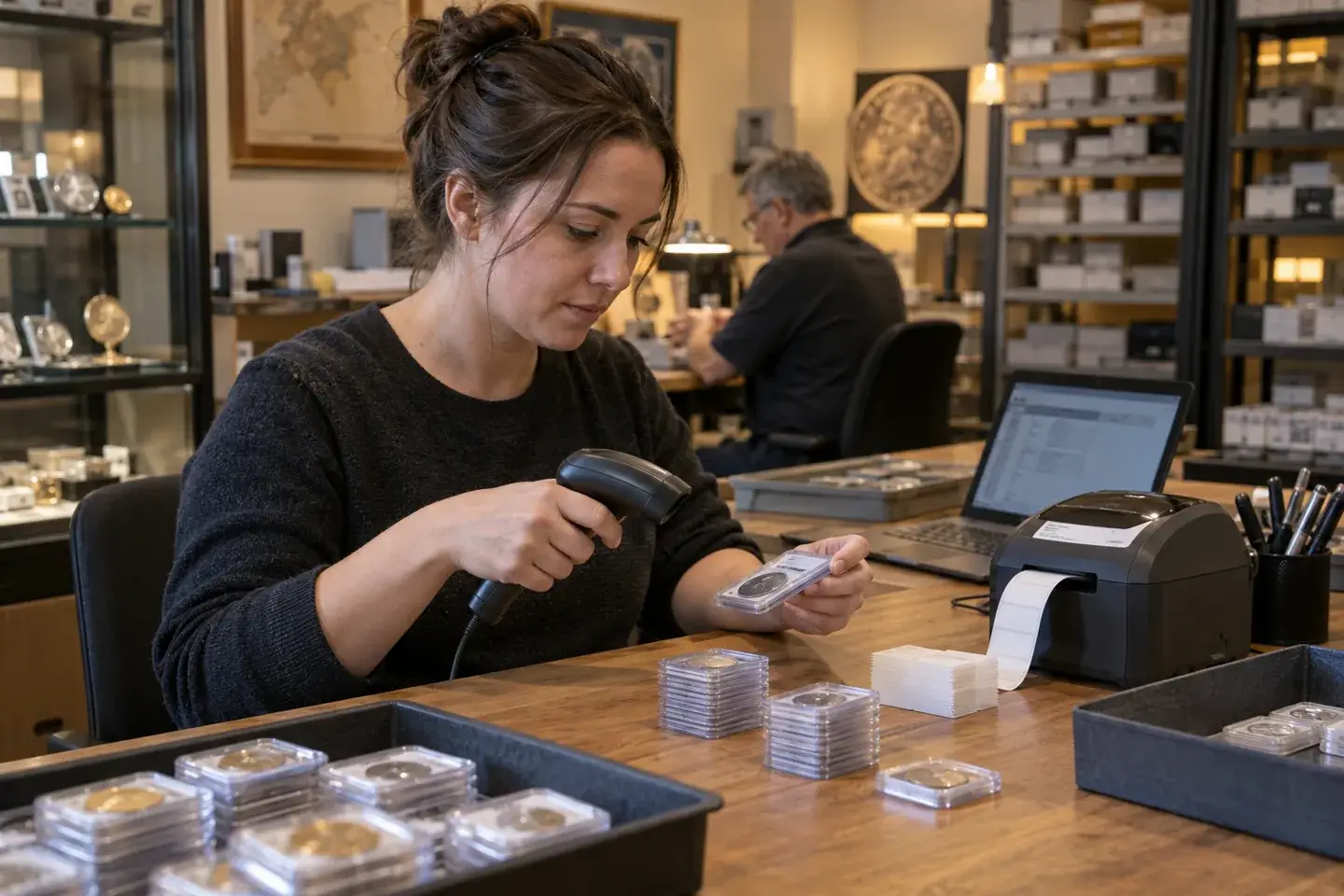
- Record the employee who selected and packed each container.
- Use numbered trays, cases, bags, or seals.
- Keep the manifest outside the inventory being transported.
- Separate reserve inventory from the public table quantity.
- Define who can open reserve containers and how that access is recorded.
Review price rules for the event
Live spot is only one component of a dealer price. Before departure, review metal-level buy and sell premiums, product-specific overrides, minimum margin expectations, price-lock behavior, quantity considerations, and manual exception authority.
Test common products across realistic spot scenarios. The purpose is not to predict the market; it is to verify that the rule behaves as intended when the market moves.
Do not make the show floor the first place a new premium rule is tested.
Build a useful quick price sheet
A quick price sheet can speed common conversations, but it should remain tied to a visible timestamp and known rule basis. Staff must know when to refresh it and when a product requires live lookup.
Include the items the show team handles most often. Avoid turning the sheet into a permanent shadow catalog. If the product, weight, condition, or quantity differs, use the product record and current pricing workflow.
Set exception and approval limits
Before the event, define who may override a price, how far they may move, and when a manager or owner must approve. Apply similar rules to large buys, unusual products, damaged packaging, uncertain authenticity, refunds, and payment changes.
The record should preserve the original price basis, the changed price, the approver, and the reason. This creates a useful margin and training review after the show without relying on memory.
Run a departure reconciliation
When packing is complete, compare the show location in the system to the physical manifest. Resolve the difference before the inventory leaves. Record the final container count, seals when used, transport owner, and receipt at the venue.
Also pack the operational tools: charged iPads, scanners, hotspots, payment devices, receipt supplies, labels, cables, batteries, stands, and the written offline fallback.