
The Cluttered Back Office: A Coin Shop Cleanup Plan for Paper, Boxes, and Binders
LEDGER · September 30, 2026
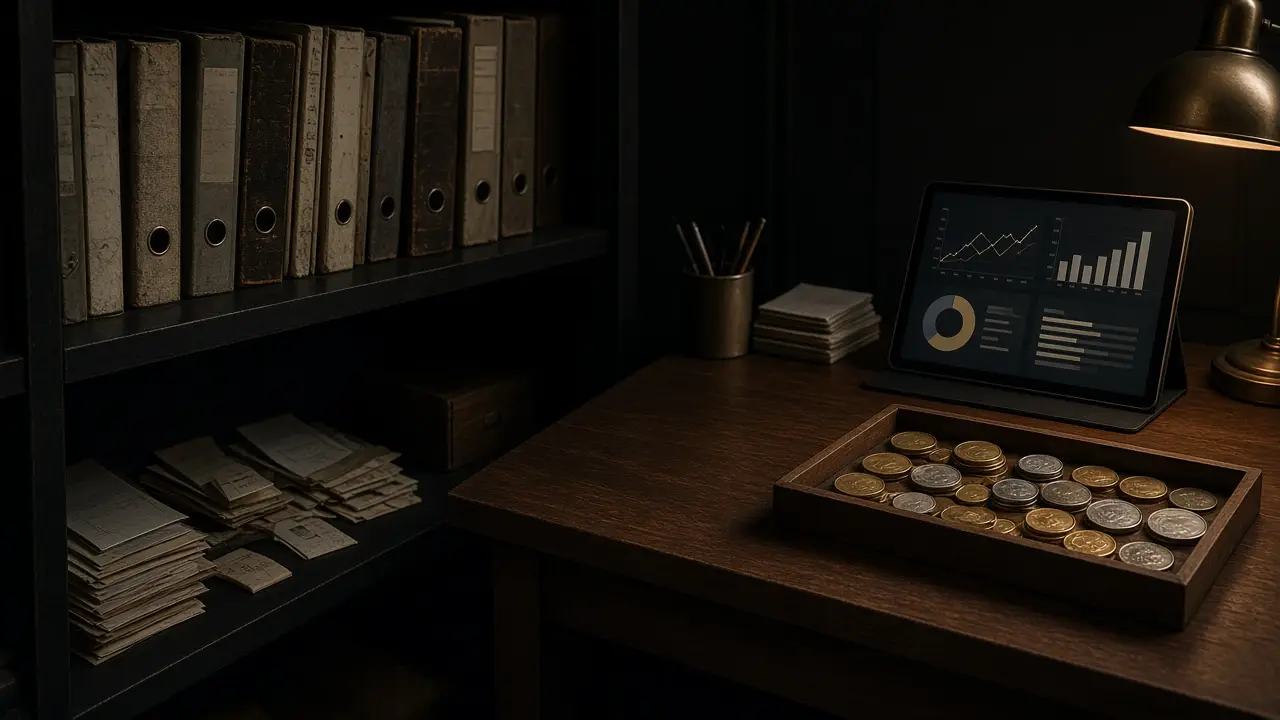
Clutter is not just untidy. In a precious-metals business, every pile is a question nobody can answer quickly. Whose is that box? Was that ticket entered? Is that tray inventory or a customer’s property? This post is a practical plan for clearing the back office by retiring the processes that create the clutter.
Clutter is a symptom, not the problem
You can clean the back office on a Sunday, and it will look the same in a month. That is because every pile is produced by a workflow that has no other place to put its output.
Paper tickets pile up because they have to be keyed in later
The stack of tickets waiting to be entered exists because the transaction was not recorded in a system when it happened.
Packing slips pile up because receiving is not connected
Slips accumulate when inbound packages have no record to attach to.
Sticky notes pile up because pricing lives in memory
Premiums, holds, and callbacks go on sticky notes when there is no shared place for them.
“Deal with later” trays exist because items have no state
A tray of mixed items with no label is usually inventory that has not been received, customer property waiting on a decision, or returns nobody has inspected.
Fix the workflow, and the pile stops growing. Clean without fixing it, and the pile comes back.
A four-week back office reset
Week 1: Sort every pile into one of four categories
Go through the back office one surface at a time and sort everything into:
- Inventory the shop owns.
- Customer property the shop is holding: mail-ins, consignments, items on hold, items awaiting pickup.
- Records: tickets, slips, invoices, bank documents.
- Supplies and everything else.
Do this with two people for any pile that might contain metal. Record what you find as you go.
Week 2: Give every item a location and a record
Inventory gets a named location and a record in quote-ready inventory with SKU, metal, quantity, vault location, and pricing. Customer property gets connected to the customer and the transaction it belongs to. Nothing goes back on a desk without a label and a record.
Week 3: Move the daily workflows off paper
This is where the reset becomes permanent. Move the workflows that produce clutter into one system: counter quoting, invoices, shipping, receiving, payments, and daily close. bullionOS connects these in one dealer operating system, so a transaction is recorded once and carried forward instead of printed, filed, and re-keyed.
Week 4: Archive the old paper properly
Historical records still matter. Box carbon tickets and old invoices by date range, label each box clearly, and store them according to your retention policy and any local requirements. Then stop adding to them.

Redesign the physical space around the workflow
Once the piles are gone, arrange the room so the workflow stays clean.
One receiving area
A single clear surface, ideally on camera, where packages are opened one at a time. Nothing is stored there. Items leave receiving with a location.
One shipping area
A separate surface for packing outbound orders, with supplies stored nearby but not mixed with inventory. Every box on this table belongs to an invoice.
Named storage locations
Every shelf, drawer, and safe compartment that holds metal has a short name that matches the system. If staff cannot name a spot, it should not hold inventory.
A hold shelf with rules
Customer holds and pickups live in one labeled place, each item linked to its invoice. Holds show up in the morning view alongside appointments and vault tasks instead of gathering dust.
A clean desk for the computer
With pricing, appointments, and payment follow-up in one view, the sticky notes and the taped-down calculator have nothing left to do. Take them down.
What a clean back office makes possible
A tidy room is nice. The real benefits are operational.
Faster answers
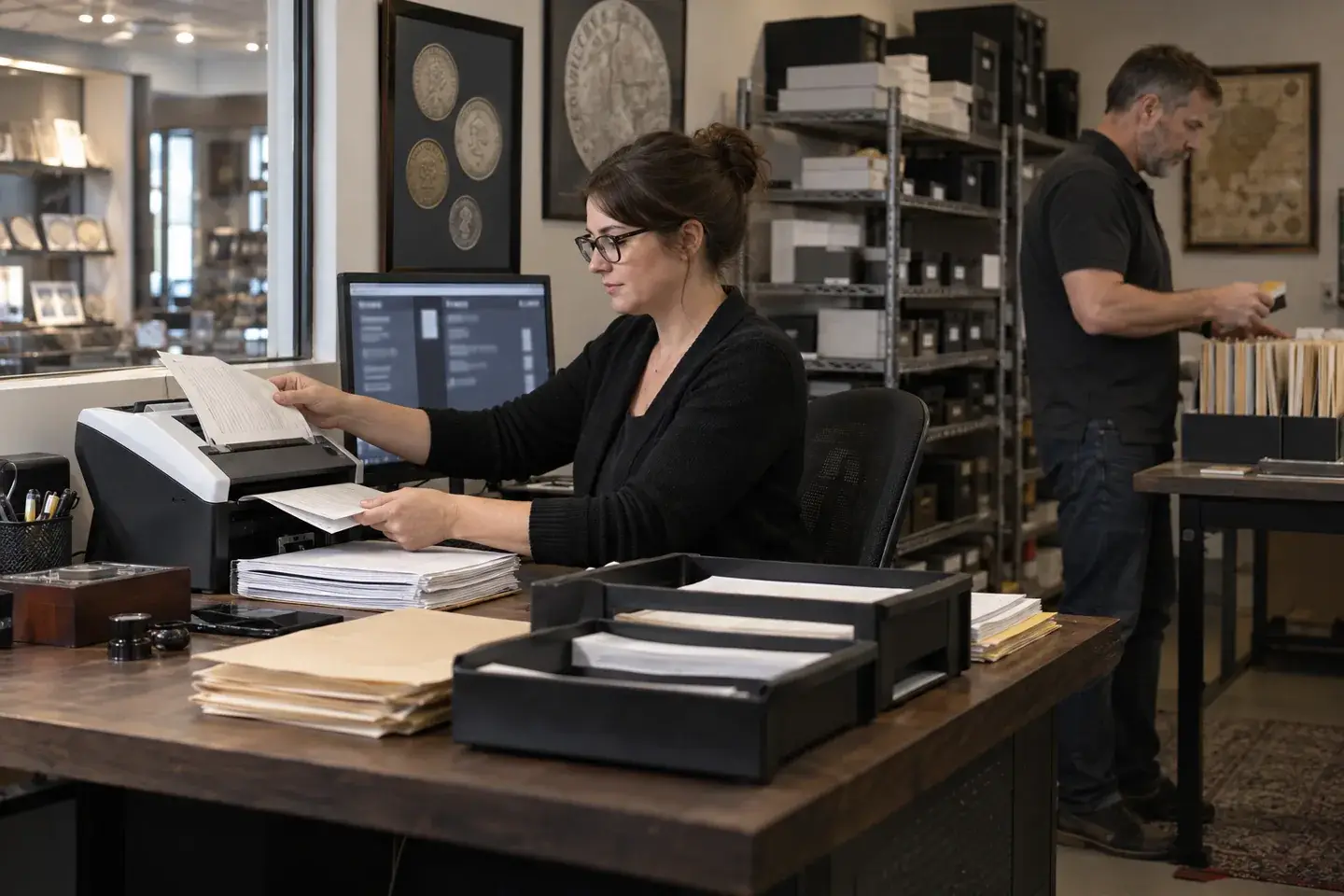
When a customer calls about an order or a mail-in, the answer is in the record, not in a pile.
Cleaner closes
When every transaction is recorded as it happens, daily cash control starts from complete information. The close stops being a hunt for the missing ticket.
Better custody
When every item has a location and a state, it is clear what the shop owns, what it is holding for others, and what is in transit. Our guide to the cage process and chain of custody goes deeper on custody controls.
Easier training
A new employee can learn a workflow that lives in one system. Learning where twenty piles go, and which ones matter, takes much longer.
A business you can step away from
When the back office runs on records instead of one person’s memory, the owner can take a day off without the shop losing track of itself.
Keeping it clean
Add a two-minute check to the daily close: no unlabeled trays, no unopened packages without a record, no paper tickets waiting to be entered, and no item on a desk without a location. When those four things are true every night, the clutter cannot rebuild.
Retiring the carbon copy is not only about the front counter. It is about the room behind it, where every pile of paper used to be a promise to deal with something later.
See the back office without the paper
We will walk through how intake, quoting, invoices, shipping, receiving, payments, and daily close fit together so the back office stops collecting piles. Book a complimentary bullionOS demo.