
Retire the Carbon Copy: What a Dealer Operating System Replaces in Your Coin Shop
LEDGER · July 15, 2026

This post walks through what those gaps cost a dealer, what a single dealer operating system replaces, and how to retire the carbon copy without shutting down the counter for a week.
The old desk: five tools, five versions of the truth
Every paper-and-spreadsheet shop has a moment when two records disagree. The ticket says one thing, the spreadsheet says another, and the person who knows the real answer is at lunch. That moment is not bad luck. It is built into the setup.
The carbon-copy ticket
A carbon ticket captures what one person wrote at one moment. It does not know what spot was when the price was set, whether the item went into the vault or the showcase, or whether the customer was paid by check or cash. The yellow copy goes in a drawer, the white copy goes home with the customer, and the pink copy goes into a box that someone will key into a spreadsheet later. Three copies, zero connections.
The spot calculator
Manual spot math means someone reads a price off a screen, multiplies by weight and purity, applies a percentage from memory, and writes a number down. It is fast when the shop is quiet and fragile when it is busy. There is no record of which spot was used, which spread applied, or who decided.
The inventory spreadsheet
A spreadsheet can list what the shop owns. It cannot tell the person at the counter whether the coin is already on hold for a phone customer, sitting in a box to ship, or listed on eBay. It is a snapshot of whenever someone last typed into it.
The shipping log and the drawer count
Package tracking lives in a carrier account, a notebook, or an inbox. The end-of-day drawer count lives on a sheet of paper. Neither one points back to the invoice that started the transaction, so when something is off, the owner reconstructs the day by hand.
What one dealer operating system means in practice
bullionOS connects coin and bullion inventory, live spot pricing, customers, invoices, shipping, payments, and daily close in one dealer operating system. The point is not more screens. The point is that a transaction is one record from the first customer conversation to the final cash review, instead of five fragments that have to be matched up later.
In practical terms, a single transaction moves through these stages without being retyped:
- Intake – the appointment or walk-in is recorded against the customer.
- Quote – pricing comes from live spot and quote-ready inventory.
- Invoice – the agreed price becomes an invoice with a visible balance.
- Shipping and receiving – packages are linked to the invoice and to vault receiving.
- Payment – payment status stays attached to the invoice.
- Daily close – cash, bank matches, and accounting review roll into one close flow.
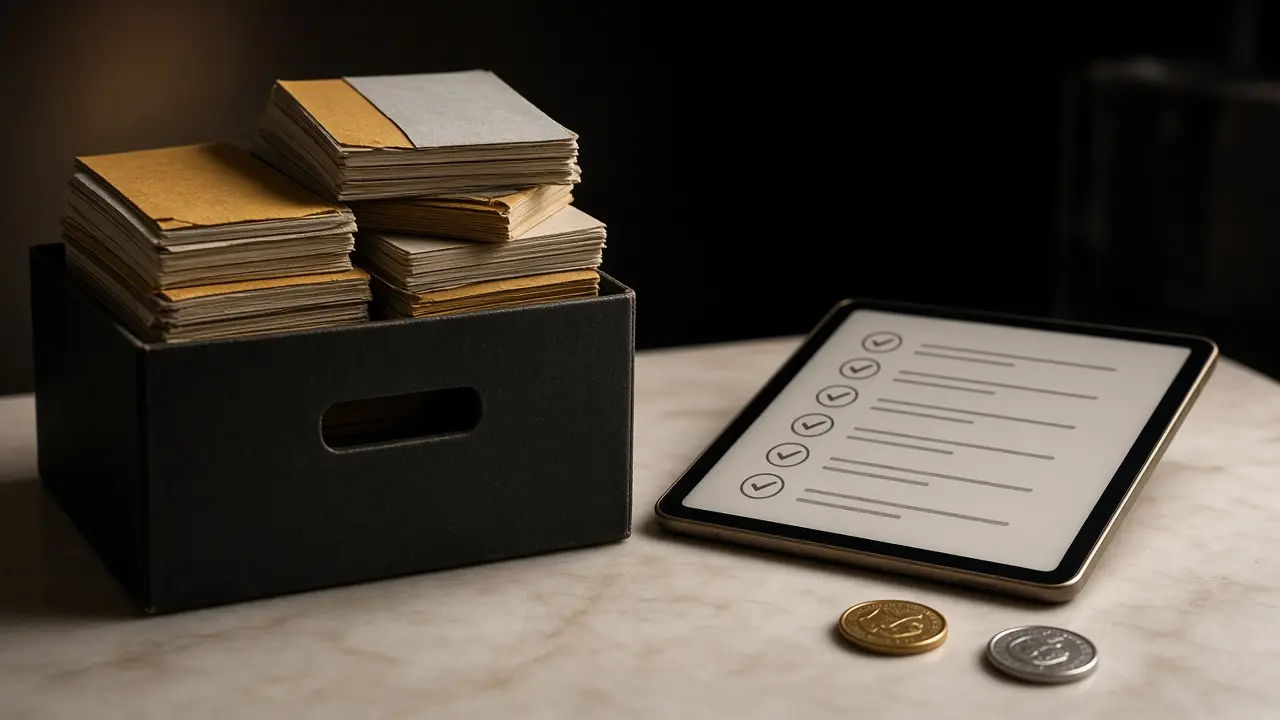
Run the desk
The first thing a connected system changes is the morning. Instead of checking a paper appointment book, a hold shelf, a list of vault tasks, and the bank portal, the desk opens on one view: today’s appointments, holds, vault tasks, and payment follow-up. Appointments show buy, sell, appraisal, and dealer-intake work beside the customer and the invoice that needs action.
That matters because most of a coin shop’s mistakes are timing mistakes. A hold expires and nobody notices. A customer arrives for a pickup that has not been pulled from the vault. A wire was promised yesterday and nobody checked. When the day’s obligations sit in one place, they get handled in order instead of by memory.
Quote the metal
Quoting is where paper costs the most, because a wrong number at the counter is a commitment. With live spot quoting and quote-ready inventory, the person at the counter can check SKU, metal, quantity, vault location, buy price, and sell price before the quote leaves the counter. They can verify availability, purity, category, and buy/sell spread before committing to a customer price.
That replaces three habits at once: the calculator, the “let me go check the back” walk, and the sticky note with this week’s premiums on it. For a deeper look at the pricing side, see our guide to live spot pricing rules for coin dealers.
Close the day
The carbon-copy shop closes by counting the drawer and hoping the number is close enough. A connected close works the other way around. Invoices, shipping, payments, and cash review stay attached to the day’s work, so the close starts from what should be there rather than from what happens to be there.

Daily cash control in bullionOS brings the cash drawer, bank balance, clearance timing, bank matches, and accounting review into one close flow. Exposure at spot keeps current holdings, unrealized P/L, and spot sensitivity visible before the desk commits capital. Close stops being a guess and becomes a checklist with answers.
How to retire paper without stopping the counter
Nobody wants to switch systems on a busy Saturday. A practical transition looks more like a staged handoff than a hard cutover.
Start with one workflow
Pick the workflow where paper hurts most. For many shops, that is counter quoting, because spot math errors cost money immediately. For others, it is shipping, because lost track of a package costs customer trust. Move that workflow first and let staff get comfortable with it.
Load the inventory you actually quote from
You do not need every album page on day one. Start with the bullion and coins that go across the counter every week. Give each one a location. Quote-ready inventory is only useful if the location is real.
Run a short, defined parallel period
If you keep paper tickets alongside the new system, set an end date. Parallel systems that run forever become two systems to reconcile. A week or two of overlap is usually enough to find the gaps in your own process.
Decide what happens to the old binders
Historical tickets still matter for record-keeping. Box and label them by date range, store them according to your retention policy and local requirements, and stop adding to them. The goal is a clear line: before this date, paper; after this date, one record.
What does not change
Software does not test a coin, judge a grade, or decide whether to buy a collection. The dealer’s judgment stays at the center of the desk. What changes is that the judgment gets recorded once, attached to the transaction, and carried through to invoice, shipment, payment, and close without anyone retyping it.
That is the whole idea behind Run the desk. Quote the metal. Close the day. Fewer pieces of paper, fewer places for the truth to split, and an owner who can see the business without rebuilding it from carbon copies every night.
If you are replacing paper across the shop, see the bullionOS solution for coin dealers.
See it against your own dealer day
If you are ready to retire the carbon copy, bring your real workflows to a walkthrough. We will map intake, quoting, invoices, shipping, receiving, payments, and daily close to how your desk actually runs. Book a complimentary bullionOS demo.