
Precious-Metals Purchase Intake: ID, Testing, Documentation, and Approval Workflow
LEDGER · September 20, 2026

Intake is a custody event before it is a pricing event
When a customer places coins, bars, jewelry, or scrap on the counter, the shop immediately has several jobs. It must distinguish the seller from any representative, preserve the composition of the lot, assess authenticity and condition, determine what it is willing to buy, document the commercial terms, and control the property until payment and final storage are complete. If these activities happen in separate notes and systems, the shop can lose the connection between the person, the test, the price, and the exact items received.
The workflow should therefore open a transaction record before detailed sorting or quoting begins. Give the lot a unique identifier and keep that identifier with the physical material. Record who accepted custody and when. If the shop has not accepted custody—for example, an employee is only looking at a closed container—make that boundary clear to the customer and the staff.
A strong intake design is progressive. It captures only what is needed at each step, prevents later steps when a required control is missing, and expands for higher-risk situations. A familiar customer selling a sealed common product may move quickly. An unfamiliar representative with a mixed estate collection requires more identity, authority, imaging, testing, approval, and custody evidence. One rigid form should not pretend those transactions carry the same risk.
Prepare the station before the seller arrives
Intake quality depends on the workspace. Use a camera-covered area with a clear counter, neutral trays, item-safe handling supplies, an approved scale, testing equipment, a barcode or label printer, and a secure place for property that must pause. Keep customer documents and active lots separated from the public area. Calibrate or verify equipment on the schedule required by the manufacturer and the shop’s policy, and record that check.
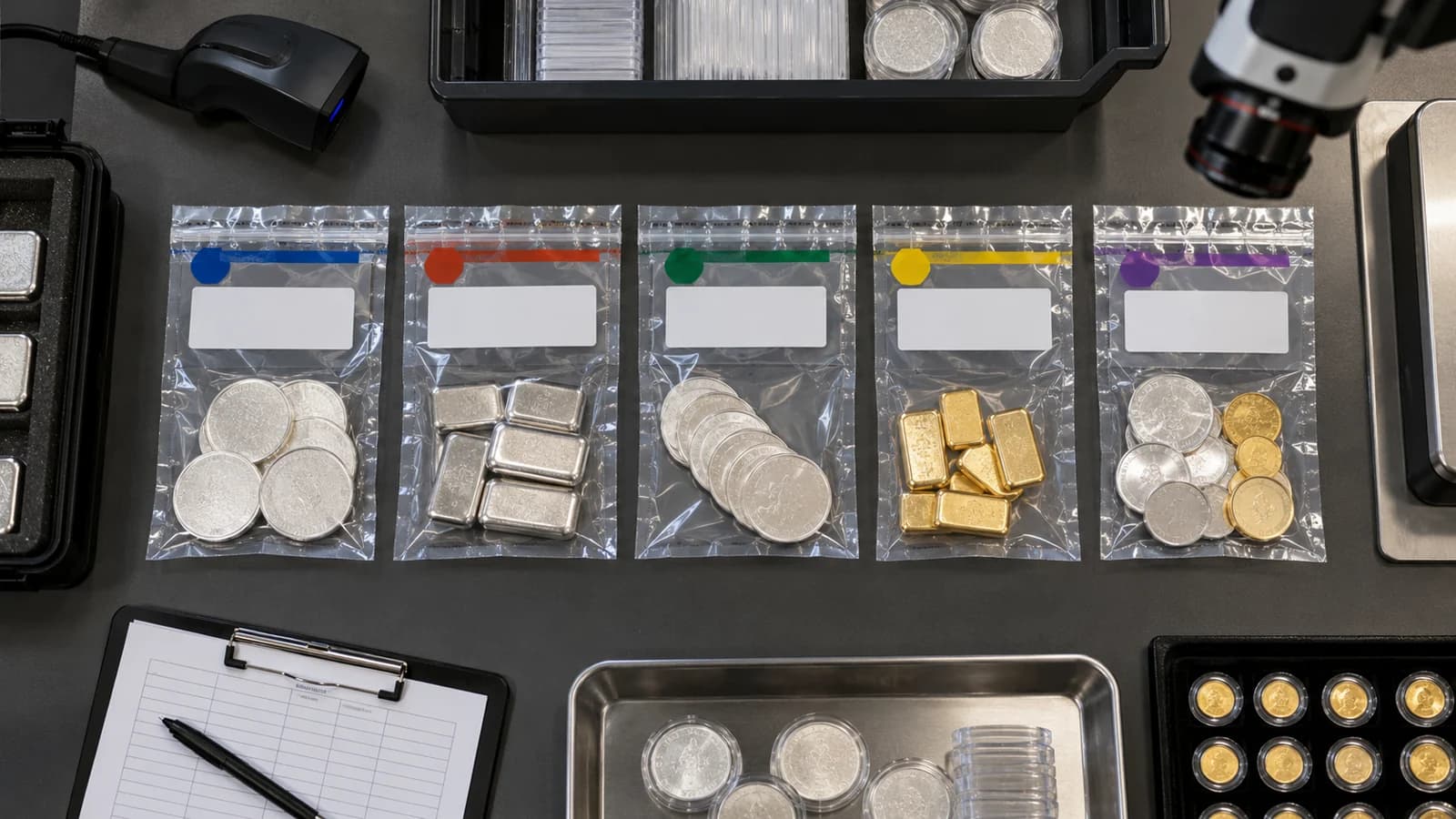
Assign one active transaction to one physical work zone. Mixed lots should have numbered trays or containers that correspond to the record. Do not rely on the employee remembering which loose pile belongs to which customer. If a transaction must be interrupted, seal or cover the group, attach the identifier, record its location, and name the custodian.
Before opening, confirm that current spot pricing is available, approved payment methods are operational, authorized buyers and approvers are known, and yesterday’s unresolved intake is visible. A prepared station reduces the temptation to skip evidence when the line grows. It also gives the customer a calm, professional experience: the shop can explain what will happen, why certain information is needed, and when the customer will receive a decision.
Verify identity and authority as separate questions
Identity answers who is present. Authority answers whether that person may sell the property. Record the information required by the laws, licenses, insurance conditions, and internal policy that apply to the shop. Those requirements can vary by state, county, municipality, item type, transaction value, and business model, so the procedure should be reviewed by qualified local counsel rather than copied from another dealer.
Use a consistent method for examining accepted identification, recording required fields, and protecting the data afterward. Do not collect extra sensitive information simply because a blank field exists. Limit access to employees who need it, keep it out of informal messages, and apply the business’s retention and secure-disposal policy. The Federal Trade Commission’s small-business guidance recommends understanding what sensitive data the business holds and controlling access to it; that is a useful design principle even when a specific rule is not being asserted.
Authority deserves its own decision. A seller may be acting for an estate, trust, corporation, family member, or consignor. The record should identify the represented party, the basis of authority, the documents reviewed, and any restriction on the sale or payment. Staff should not interpret complicated legal documents beyond their training. Define a stop condition for missing, conflicting, or uncertain authority and route it for management or legal review before the shop takes irreversible action.
Create the lot record before changing the lot
Capture an arrival overview while the material is still in the organization presented by the seller. Photograph containers and meaningful groupings, not every common item by default. Record the seller’s description as a statement, not a verified fact. Note visible seals, labels, damage, or unusual packaging. If the collection arrives in numbered boxes, preserve those references until the shop and seller agree on a new structure.
Then decide the appropriate unit of control. A sealed bar with a serial number is usually an item. A tube of homogeneous common rounds may be a lot if policy permits. A bag of mixed jewelry may need category-level or item-level breakout depending on value and test variation. The rule should prevent high-value or materially different pieces from disappearing inside a broad lot description.
Each controlled unit needs a description, quantity, gross or net weight where relevant, metal and fineness claim, identifying mark or serial when present, condition or packaging note, and physical location. Use labels that survive the entire workflow. If an item is removed for additional testing, its status and custodian should change in the record at the same time. The digital record and the trays on the counter should tell the same story.
Use a testing ladder
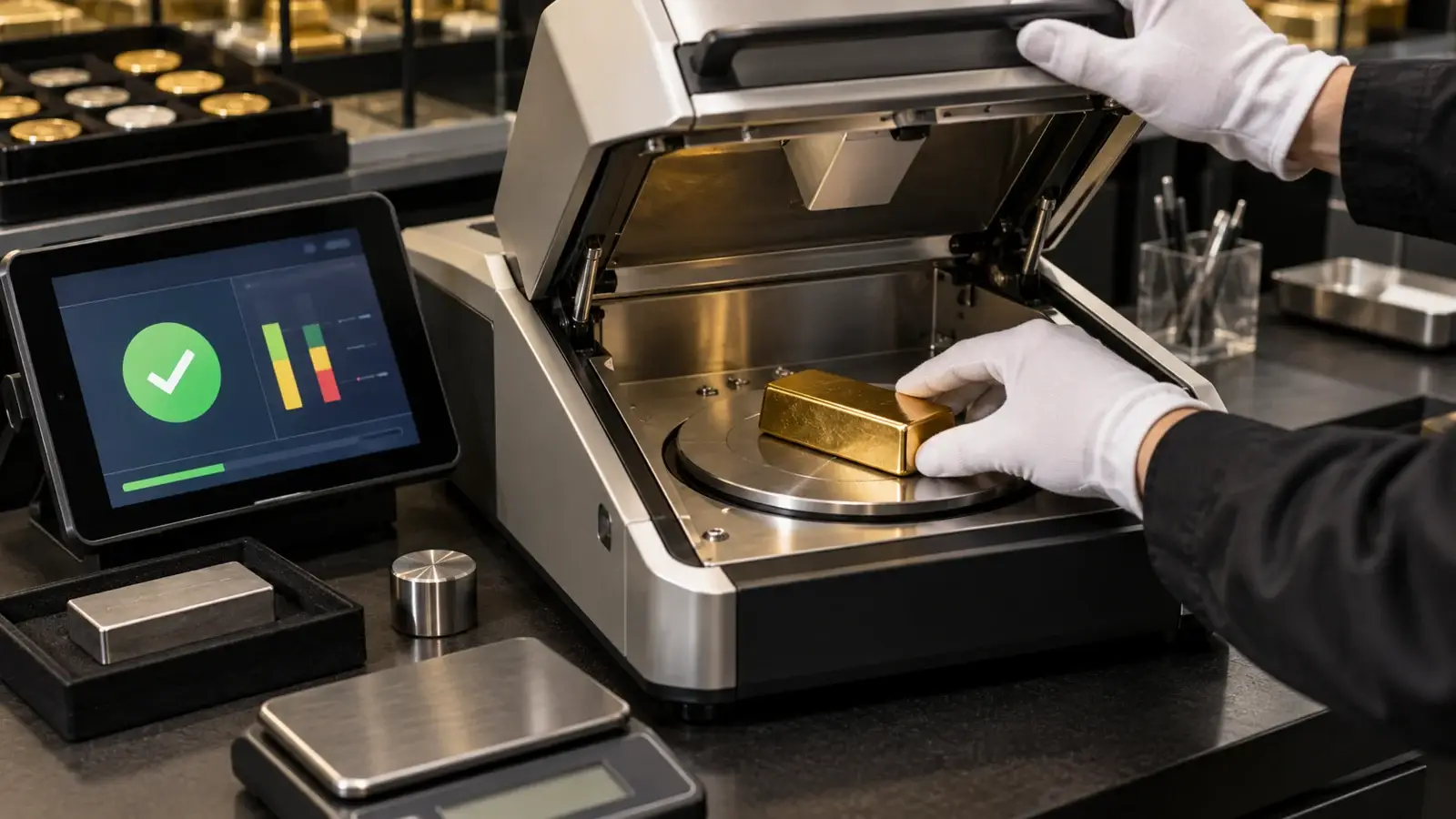
No single test answers every authenticity question. Build an approved testing ladder based on product type, value, packaging, condition, and observed risk. Visual comparison, dimensions, magnetism, weight, density, electrical conductivity, ultrasonic examination, X-ray fluorescence, and carefully controlled destructive methods each have strengths and limits. Staff should use only tools and methods for which they are trained, follow equipment and safety instructions, and understand what the result does—and does not—prove.
Start with the least invasive methods that provide sufficient confidence. Escalate when results conflict, tolerances fail, packaging prevents a reliable conclusion, the value exceeds a threshold, or the item belongs to a known risk category. A sealed product should not be opened without the customer’s authorization and a clear explanation of the effect on value. A destructive sample should never become an unrecorded improvisation.
Record the method, device or station, operator, time, result, and any image or measurement needed to reproduce the decision. “Tested good” is too vague. For a homogeneous lot, record how the sample was selected and what permitted the conclusion to apply to the group. Failed or inconclusive material should move to a visibly quarantined state while the customer still owns it or while the shop determines the next permitted action.
Price from recorded inputs
A purchase offer should be reconstructable. Preserve the spot source and timestamp used, metal content or product basis, quantity, unit, bid rule or premium, grade or condition assumption, deductions, and the time the offer expires. If the shop buys an item for numismatic value rather than metal value, identify the pricing basis and responsible buyer. Avoid a final total with no item-level bridge.
Separate identification from valuation. An authentic piece may still be unattractive inventory, require specialist review, or have uncertain grade. Conversely, an employee should not lower a test standard because the proposed purchase appears profitable. The record should distinguish “verified enough to buy,” “commercial category,” and “offer calculation.” That distinction helps managers find whether later margin came from market movement, grading judgment, operational efficiency, or a pricing exception.
Present the offer in a format the customer can understand. Show what the shop is buying, the quantities or weights, the agreed price or calculation, and material deductions. Explain which items are excluded and return them before final acceptance. When an offer changes after additional testing or sorting, preserve the earlier version and the reason rather than silently overwriting it.
Place approval between the offer and payment
Approval rules should reflect risk, not only dollar value. Useful triggers include transaction amount, employee limit, unusual payment destination, first-time seller, third-party authority, failed or conflicting tests, manual spot entry, off-matrix pricing, high-risk product, after-hours activity, or a repeat exception. The initiator may prepare the offer, but a qualified second person should approve defined high-risk cases before payment is released.
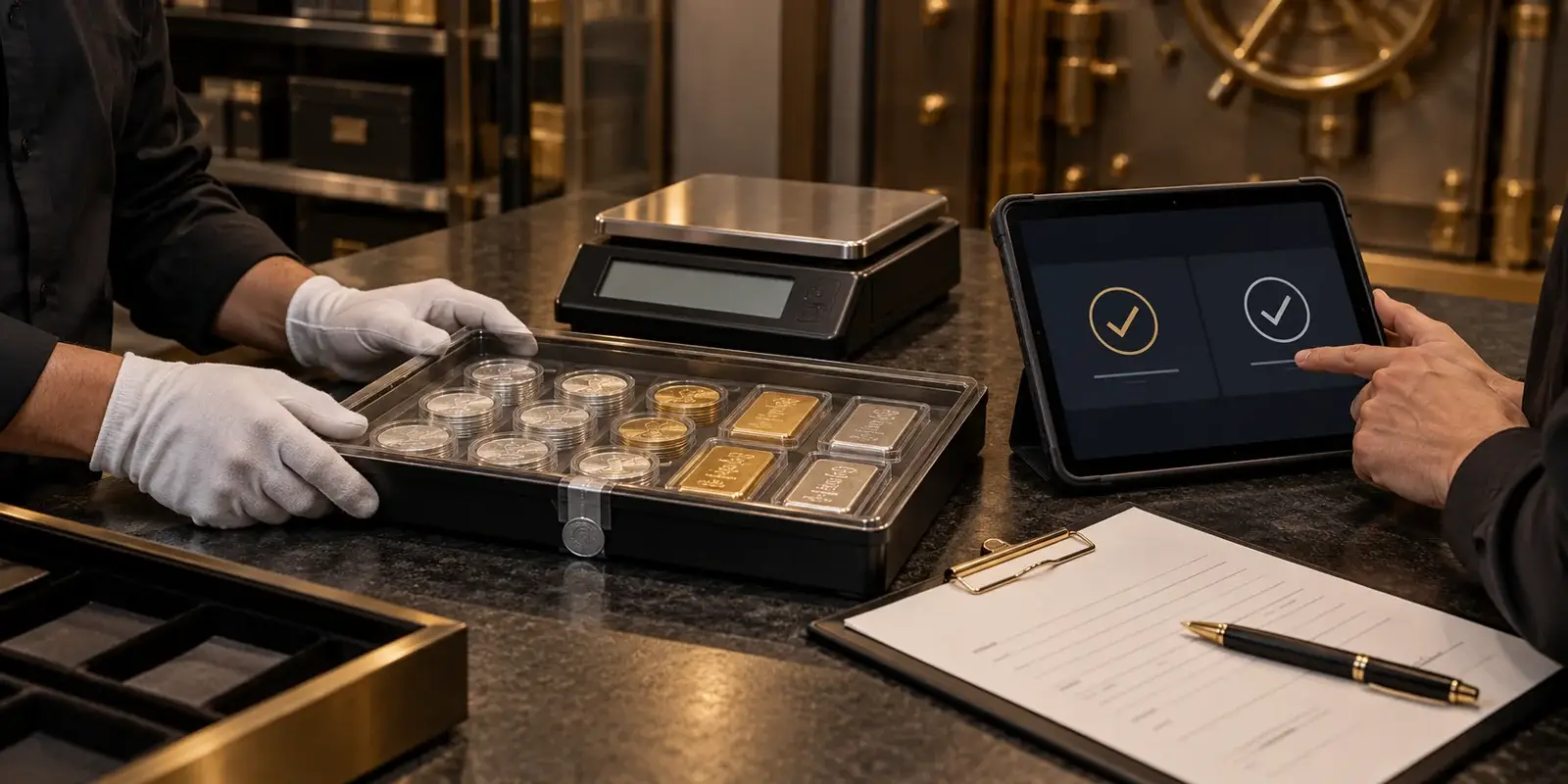
The approver needs the complete record: seller and authority status, lot description, test evidence, calculation, payment method, and exception notes. A one-click approval with no context is theater. The system should record the approver, timestamp, version approved, and any condition. If the record changes materially after approval, require a new approval.
Small shops can still separate duties without adding headcount. The second person may be a manager reviewing remotely, a later-day payment release, or a two-person physical verification for a high-value lot. The key is to define where one person’s judgment is sufficient and where a distinct authorized reviewer must participate. Emergency overrides should be rare, visible, reason-coded, and reviewed the next business day.
Release payment from the approved record
Payment should inherit the seller or authorized payee, amount, method, and approval from the purchase record. Verify any required name match and bank or check instructions through the shop’s approved process. Never change payment destination from an unverified email or text alone. Record check number, transfer reference, cash source, or other confirmation without exposing full financial credentials to unnecessary users.
For U.S. businesses, cash reporting can affect certain transactions. The IRS states that a trade or business receiving more than $10,000 in cash in one transaction or related transactions generally must file Form 8300; its definition of cash can also include certain monetary instruments in designated reporting transactions, including sales involving coins or metals. Use the current IRS instructions and professional advice to configure prompts, aggregation, filing, customer statements, and record retention. Do not rely on a point-of-sale total alone to determine an obligation.
Maintain distinct statuses for payment proposed, approved, initiated, issued, cleared, failed, voided, or replaced. A printed check is not the same as a cleared payment. If payment fails, keep the inventory and custody status aligned with the shop’s legal rights and policy. Corrections should reverse or replace the original event rather than erase it.
This article describes operational controls, not legal, tax, testing, safety, or compliance advice. Requirements differ by jurisdiction and transaction. Confirm the shop’s policy with qualified advisers and applicable authorities.
Close custody only when the physical lot is located
After acceptance, label every item or lot with the transaction identifier and route it to an approved state: quarantine, awaiting specialist review, hold, processing, available inventory, refining, consignment, or shipment. The location should be specific enough that another authorized person can retrieve and verify the property. “In the back” is not a location.
Where local secondhand-dealer, pawn, law-enforcement reporting, or holding rules apply, make those requirements explicit in the item state and release date. Rules vary substantially, so configure them from current local guidance. A hold item must not become sellable because somebody moved it to the wrong shelf. The physical label, system status, and user permissions should reinforce the same restriction.
At the end of the transaction, reconcile what arrived, what was returned to the customer, what was purchased, what was paid, and where the purchased property now sits. The employee should not be able to close the record while controlled units are unlocated or unresolved. Review open intake at shift change and close; age anything awaiting tests, approval, payment, or placement.
Handle suspicious or failed material without improvising
Define a calm, safety-first response for suspected counterfeit, stolen, hazardous, or misrepresented property. Staff should avoid accusations, preserve observations and test results, pause the transaction, and involve the designated manager. The appropriate next step depends on law, safety, and policy; employees should not detain a person or property unless trained and legally authorized to do so.
Keep the exception record factual. Note the observed mismatch, method used, result, customer response, people present, and disposition. Preserve relevant camera references according to policy. If the item leaves with the customer, record that custody ended. If it remains, document the legal and customer basis, current custodian, location, and next action.
Review failed and inconclusive tests as a group. Patterns can identify training gaps, device issues, product risks, or attempts repeated across locations. Limit sensitive case access, but ensure the operating lesson reaches the employees who need it. A good incident process improves the next intake instead of producing a private story known only to the manager who happened to be there.
The daily intake control report
A short daily review should show every open lot and the reason it remains open; purchases above approval thresholds; manual pricing or spot overrides; failed and inconclusive tests; payments issued but not completed; items in hold or quarantine; transactions with missing identity or authority evidence; and property without a valid location. Assign each exception an owner and due time.
Useful performance measures include intake-to-offer time, approval turnaround, percentage of transactions needing rework, missing-evidence rate, count of unlocated units, age of quarantined lots, payment failures, and gross margin by buying category. Speed matters, but never optimize it alone. A fast process that creates weak records simply moves the cost into reconciliation, disputes, and inventory loss.
The best workflow feels simple because the complex controls appear only when risk requires them. Staff open one record, advance it through visible states, and attach evidence as a by-product of doing the work. Managers see the exceptions without interrupting every routine purchase. Customers receive a clear explanation and settlement. And the shop can connect every acquired ounce to the person, decision, payment, and location that brought it into inventory.
Connect this workflow in bullionOS
Bring this operating process into one connected dealer record. Explore Coin Inventory Software for Dealers, or visit the bullionOS dealer operations resource hub for related guides.