
Multi-Location Bullion Inventory Transfers: A Chain-of-Custody Playbook
LEDGER · August 16, 2026
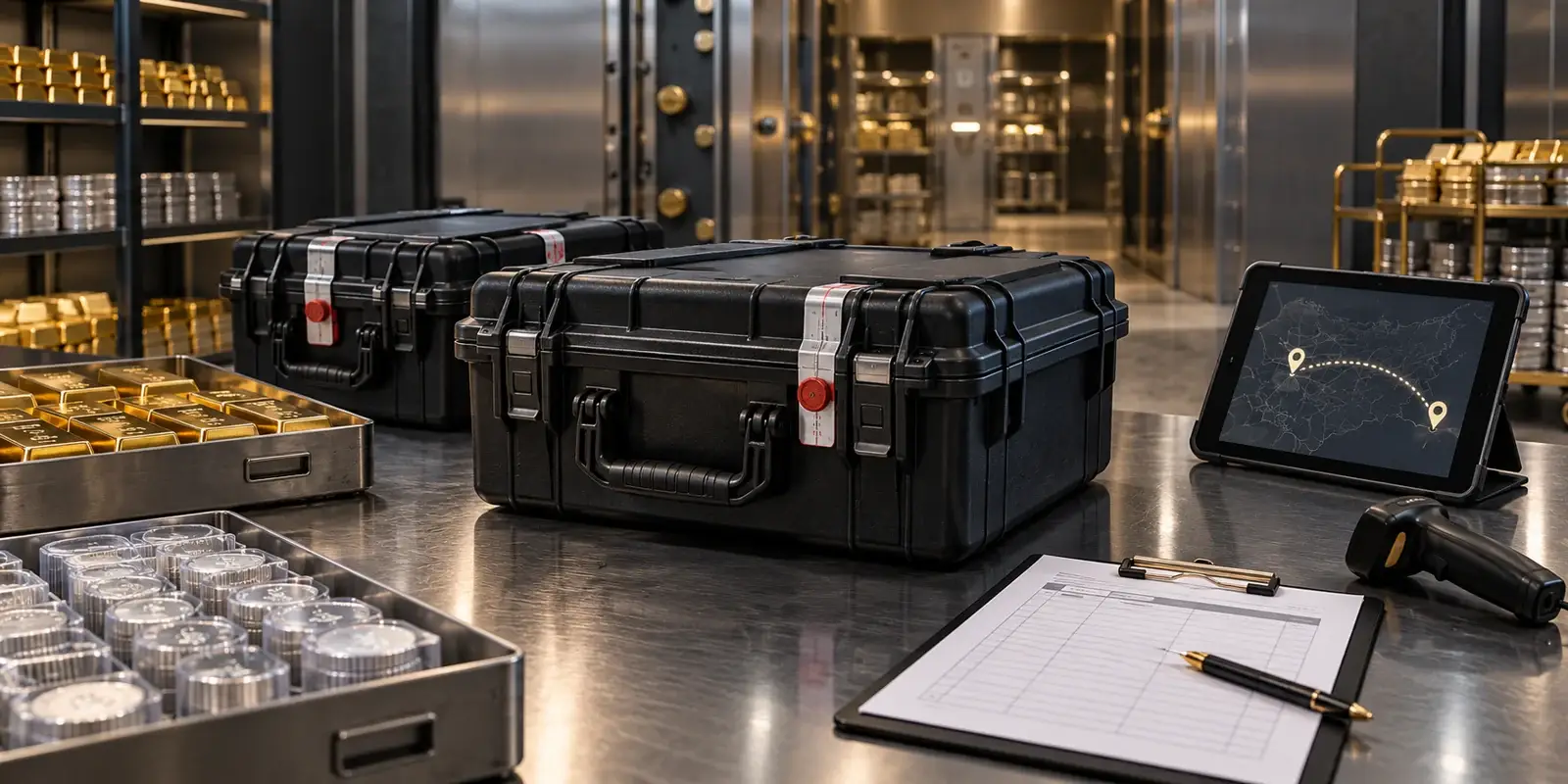
A transfer has two inventories and one period of uncertainty
Multi-location dealers need to rebalance stock, fulfill orders, supply shows, centralize processing, and move property to secure storage. The danger is that each location’s local process can appear correct while the organization as a whole loses the item between them. The source marks it gone; the destination has not received it; and a generic “in transit” balance becomes a place where differences wait.
Treat a transfer as a controlled transaction with a source, destination, business reason, requested items, authorization, custody milestones, expected arrival, and final acceptance. Ownership generally stays with the same business, but responsibility and physical control change. The record should show who has custody at every moment.
Never use an inventory adjustment as a shortcut for movement. An adjustment changes what the system believes exists. A transfer explains where existing property went. If the movement later reveals a shortage, preserve the transfer evidence and resolve the variance separately rather than editing the shipment until it matches the receipt.
Authorize the need before picking
Start with a request that identifies destination, purpose, required date, product or item, quantity, acceptable substitutions, customer reservation if any, priority, and requester. Common purposes include branch replenishment, customer pickup, show allocation, specialist evaluation, grading, refining, repair, and vault consolidation. Different purposes may require different destinations and custody rules.
Check available quantity, not merely on-hand quantity. Inventory reserved for a customer, under hold, quarantined, committed to another transfer, or awaiting verification may be physically present but unavailable. A manager should approve transfers above value, distance, category, or urgency thresholds. Substitutions should be explicit; do not let the picker silently replace one serial-numbered bar or collectible with another.
Assign a unique transfer number and planned route. The source owns preparation until a defined handoff. The carrier or employee owns transit according to policy. The destination owns verification after receipt. Name these owners in advance so an overdue transfer does not become everybody’s problem and nobody’s task.
Freeze a transfer snapshot
Once approved, create a versioned pick list containing item identifiers, descriptions, quantities, serials where present, expected condition or packaging, source locations, destination, and any customer or order link. The snapshot should reflect what the destination is expected to receive even if catalog data changes later.
Reserve the units immediately. A reserved unit remains physically at the source until picked, but it should no longer appear available for a new sale or transfer. Record who created and approved the snapshot. Material additions, removals, or substitutions require a revised version and renewed approval according to thresholds.
Separate operational descriptions from sensitive transport information. Staff who need to pick the items may not need complete route details, and a driver may not need customer notes. Apply least-privilege access while keeping the controlled record complete for authorized reviewers.
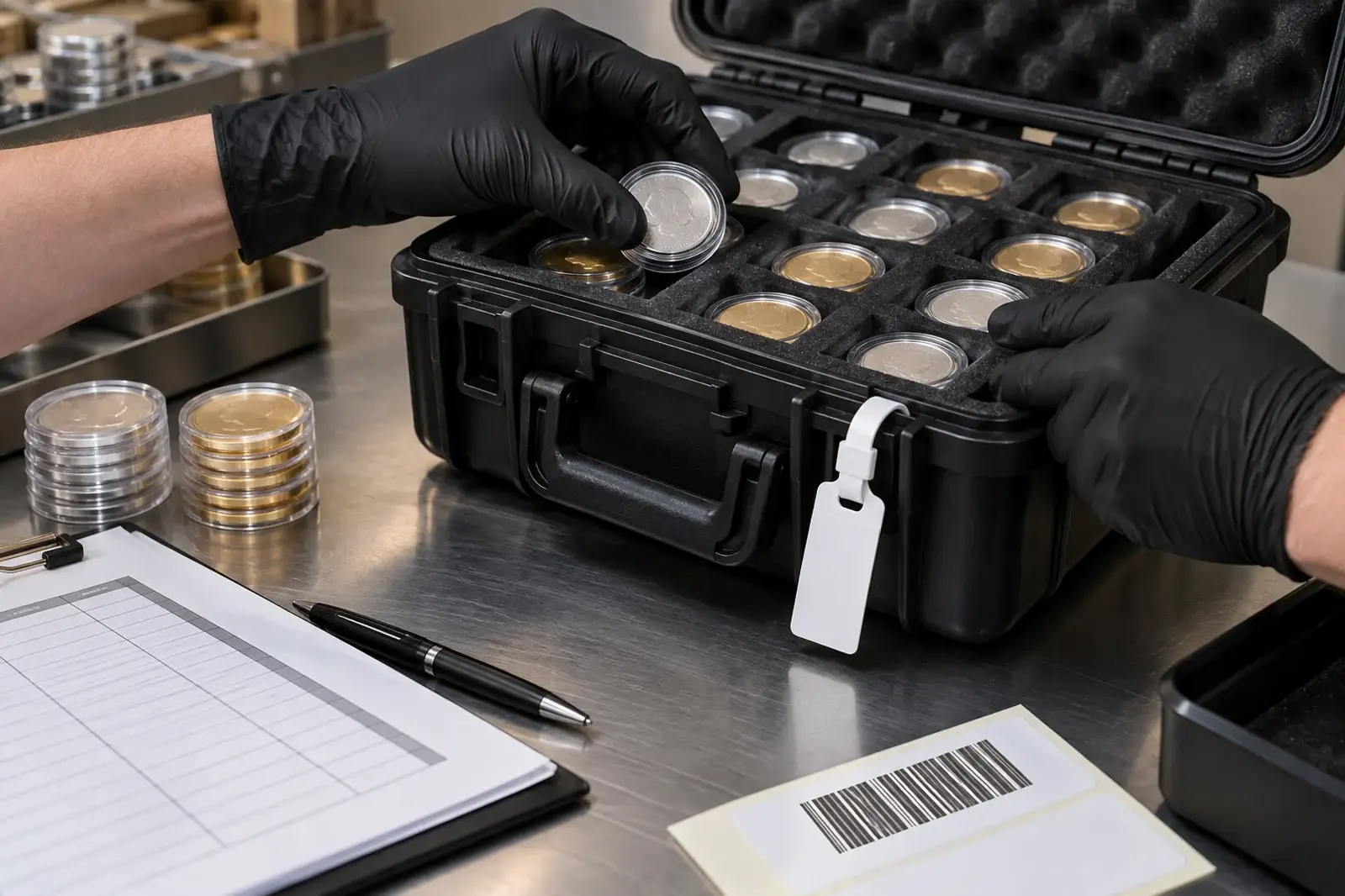
Pick from location, not from memory
The picker should work through the source locations in a controlled sequence and scan or confirm each item against the approved list. Record the actual source bin, vault, case, or tray. For serial-numbered or individually controlled items, match the exact identifier. For homogeneous bulk material, use the approved unit of measure and lot rule.
Use separate trays for not-yet-picked, picked, and exception items. Do not place unrelated transfers on the same open bench. If an item is missing, mislabeled, reserved, damaged, or inconsistent with the record, stop that line and create an exception. Never substitute silently or decrease the expected quantity after the fact.
The act of picking changes the item to a staged-transfer location and status. This creates an auditable intermediate state: no longer in its normal shelf position, not yet handed to transit. If the transfer is canceled, return units through a controlled restock step instead of making them reappear automatically.
Verify independently before sealing
A verifier should compare the staged property with the transfer snapshot. For higher-risk transfers, use a person different from the picker. The verifier confirms item or lot identifiers, quantity, weight where appropriate, serials, condition, packaging, and required documentation. Their job is not to repeat the picker’s checkmark; it is to form an independent conclusion.
Where full independent verification is impractical for bulk material, define a documented method based on risk and homogeneous lot controls. Do not label casual sampling as a full count. High-value, unique, or serial-numbered items should receive item-level verification unless a qualified risk policy says otherwise.
Record the verifier, time, device or scale where relevant, and result. Resolve discrepancies before sealing. Once complete, generate a packing schedule that identifies the items assigned to each inner container and outer package. The destination will receive against this frozen schedule, not a mutable live inventory screen.
Seal a package that can be received intelligently
Use packaging appropriate to product, value, distance, handling, and insurance. Protect surfaces and holders, control movement inside the container, and avoid external markings that advertise valuable contents. Apply tamper-evident controls according to policy and record every seal identifier. Photograph sealed containers where appropriate.
The outer package record should identify its transfer, package number, gross weight where useful, seal, sender, destination, and handling instructions without exposing unnecessary contents. The detailed packing schedule can be delivered through the secure system rather than placed visibly on the outside.
Define what happens if the seal fails during preparation. Do not reuse the same record as though nothing happened. Record the broken or voided seal, reason, people present, re-verification performed, and replacement seal. This history protects both locations when the package arrives.
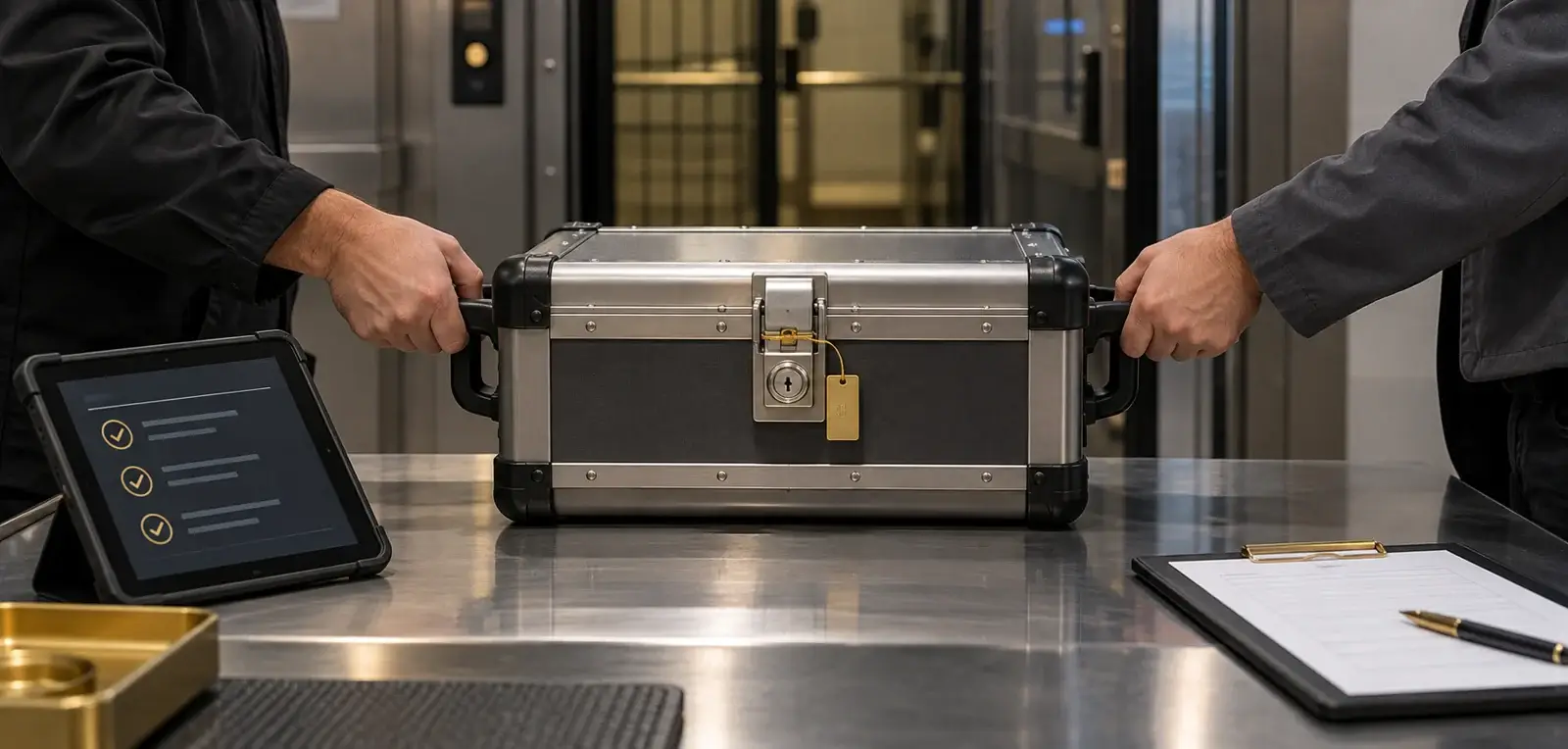
Make every custody handoff explicit
At dispatch, record the person releasing the package, person or approved carrier accepting it, timestamp, package and seal identifiers, number of packages, method, tracking or route reference, expected arrival, and condition. The sender’s status becomes dispatched only after the receiver of that handoff accepts custody.
Use transport methods, limits, routes, communication practices, and insurance that have been approved for the business. Do not publish sensitive security detail in general SOPs or customer notes. Employees transporting value need role-specific instructions, emergency contacts, and a prohibition against unapproved route, stop, or custody changes.
Monitor exceptions rather than creating unnecessary location broadcasts. A transfer should alert the responsible parties when it misses a scan or expected window, not expose real-time high-value movement to everyone. If a package is delayed, damaged, lost, or diverted, follow the incident and insurer notification process while preserving carrier messages, images, tracking events, and internal actions.
Receive the container before receiving the contents
The destination should first verify the transfer number, package count, exterior condition, expected sender, seal identifiers, and handoff time. Photograph damage or discrepancy before opening. If a seal is missing or inconsistent, route the package to the designated secure exception area and involve an authorized manager. Do not normalize a broken seal because the contents “probably look fine.”
Record acceptance from the carrier or delivering employee separately from content acceptance. The destination may physically possess the package while the contents remain unverified. This distinction matters when there is a shortage and for understanding how long transfers sit unopened.
Open the package under the required camera and staffing conditions. Preserve packaging and seal evidence until the content count is complete. Keep one transfer at one controlled receiving station. The receiving employee should not have to guess which packing version is authoritative.
Use a blind or semi-blind receiving count
Where risk warrants, ask the receiver to record what is present before displaying expected quantities. This reduces anchoring—the tendency to stop when the count matches the number shown. For unique items, verify identifiers and condition. For bulk lots, follow the approved count or weight method and record any sampling limitation.
Compare the observed receipt to the frozen packing schedule. Record full receipt, overage, shortage, wrong item, serial mismatch, damage, or condition change at line level. Attach images and notes. A discrepancy should not be “fixed” by editing the sent quantity; the sent and received observations are the evidence needed to investigate.
After verification, the receiver accepts the matching units and assigns destination locations. Availability depends on purpose: replenishment may become sellable after receipt, a customer order may remain reserved, show stock may move to a show location, and items for testing or grading remain unavailable. The transfer closes only when every line has a destination or an open variance.
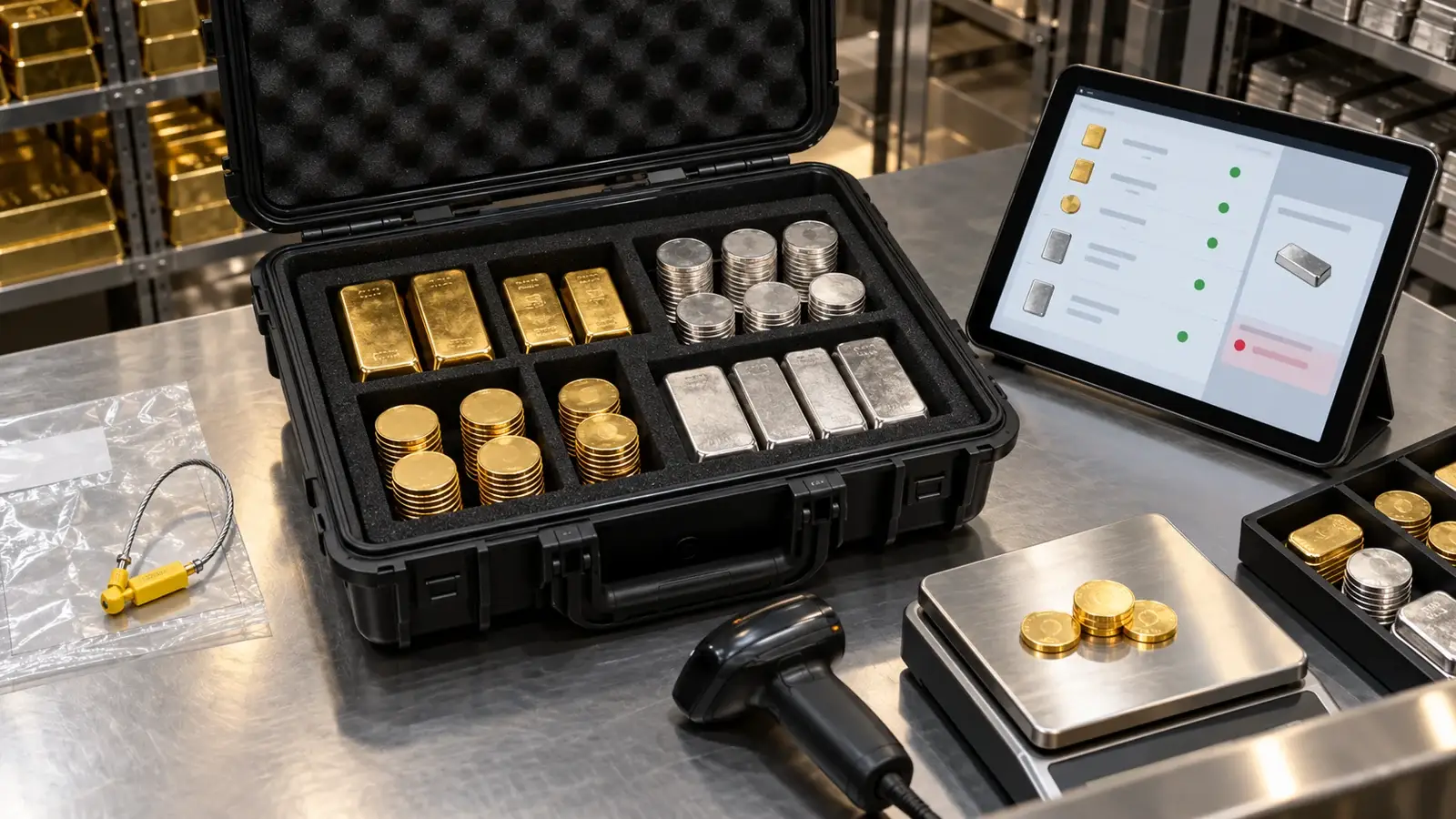
Investigate variances without destroying the trail
Contain the affected property and preserve package, seal, camera, scale, scanner, and system evidence. Confirm that the correct transfer and version were used. Recount independently. Review source pick, verification, packing, dispatch, carrier handoffs, destination opening, and receipt. Check whether an item was placed in the wrong inner container or destination tray.
Assign one investigator and a due time based on value and severity. Record facts separately from conclusions. If an item is found, post the location and custody correction with a reason; do not erase the discrepancy event. If the variance remains, follow management, insurer, carrier, legal, and accounting procedures appropriate to the case.
Classify root cause: master-data error, source location error, pick error, verification failure, packing error, seal failure, transit incident, receiving error, unit-of-measure issue, timing problem, or unresolved loss. Correct the process, not only the quantity. Repeated “no issue found” closures are themselves a control signal.
Reconcile transfer states every day
Review approved but unpicked, staged but undispatched, dispatched but overdue, delivered but unopened, partially received, and variance-open transfers. Each record needs a current custodian, next action, and time expectation. Focus on value and risk as well as count; one overdue high-value case deserves more attention than several low-value replenishments.
At period close, the in-transit inventory total must reconcile to individual transfer lines. Match carrier records, location ledgers, item states, reservations, and accounting treatment. If the same legal entity owns both locations, avoid recording a false sale. If entities differ, obtain professional accounting and tax guidance and reflect the actual intercompany transaction rather than forcing it into a branch-transfer model.
Confirm insurance requirements against observed practice. Value limits, approved carriers, packaging, routes, staffing, reporting windows, and evidence may affect coverage. The system can remind and document, but the dealer and adviser must define the conditions.
Measure the transfer system
Track request-to-approval, approval-to-pick, pick-to-dispatch, transit time, delivery-to-content acceptance, total completion time, overdue value, variances by type and value, reopens, seal exceptions, manual substitutions, transfer frequency by route, and inventory unavailable while in transit. Measure customer-order transfers separately from routine replenishment.
Investigate speed and quality together. Dispatching quickly while destination packages wait unopened does not improve availability. A zero-variance report may indicate excellent controls or a receiving process that silently edits expected quantities. Sample records for independent evidence.
Use the data to refine replenishment thresholds, transfer days, secure capacity, staff coverage, packaging, carrier choices, and approval limits. The best transfer is sometimes the one avoided by better inventory planning. When a transfer is necessary, the record should make its status unambiguous from request through final shelf.
Transfer-control checklist
- Approve purpose, source, destination, available quantity, timing, and route.
- Freeze the item schedule; reserve, pick, verify, pack, and seal against it.
- Record every custody handoff and monitor the expected arrival window.
- Verify package and seal before opening; count contents against the frozen version.
- Locate accepted items and investigate variances without overwriting evidence.
- Reconcile all in-transit value and review performance by route and reason.
“In transit” is a temporary custody state with a named owner—not a suspense account for inventory the organization cannot locate.
Connect this workflow in bullionOS
Bring this operating process into one connected dealer record. Explore Coin Inventory Software for Dealers, or visit the bullionOS dealer operations resource hub for related guides.