
Coin Shop Appointment Scheduling: Match Demand to Staff, Rooms, and Secure Capacity
LEDGER · July 26, 2026
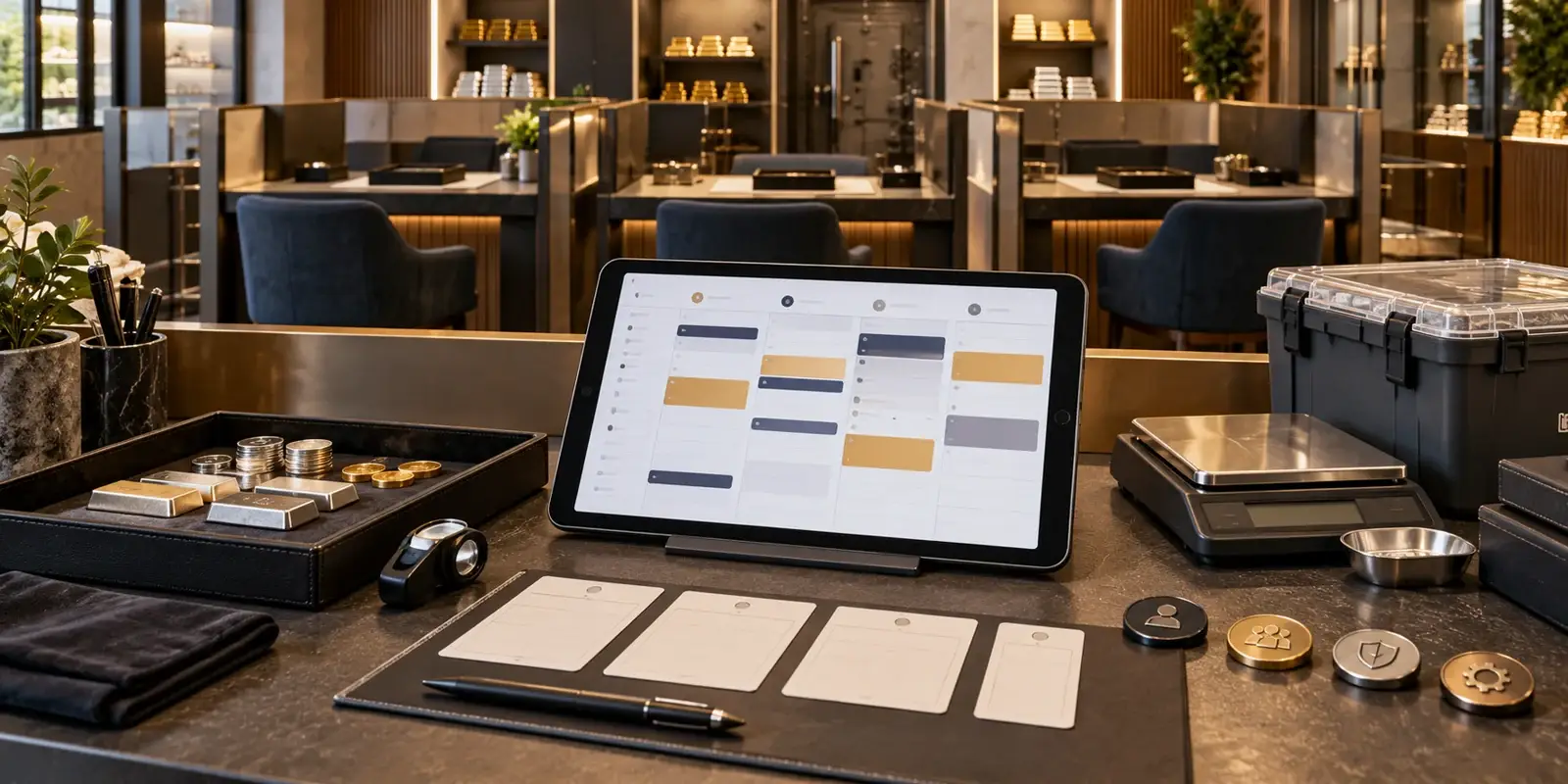
The calendar should model the work
Two appointments scheduled for 10 a.m. can require completely different operations. A customer collecting a paid bullion order may need ten controlled minutes and two-person release. A mixed estate collection may need a private room, senior buyer, testing bench, several hours, and secure overnight capacity. Treating both as generic appointments creates queues, rushed intake, idle specialists, and property waiting in improvised locations.
Build scheduling around service types with known requirements. The type drives expected duration, preparation questions, eligible staff, room or station, equipment, value or item limits, documentation, and follow-up. Staff can adjust for the individual case, but they begin with an operating model rather than a blank event.
The purpose is not to eliminate walk-ins or make every visit bureaucratic. It is to understand capacity and protect the moments where privacy, expertise, and custody matter. A visible schedule also lets the opening team prepare for the day’s metal, money, and customer needs before the first door opens.
Define service types and realistic durations
Start with the work the shop actually performs: bullion purchase, bullion sale or pickup, small collection evaluation, large or estate collection, numismatic consultation, jewelry or scrap intake, appraisal consultation, dealer appointment, consignment review, and follow-up or settlement. Include a walk-in triage type even if it cannot be booked publicly.
For each type, measure active time and total elapsed time. An employee may need forty minutes with a customer and twenty more minutes to finish labels, payment, receiving, or notes. If the calendar reserves only face-to-face time, unfinished work accumulates between appointments. Add setup, closeout, and recovery buffers where the workflow demands them.
Use ranges or complexity bands. “Collection review—up to 25 items” can have a shorter default than “estate intake—multiple containers.” Let staff escalate a booking when the pre-visit information reveals more work. Periodically compare scheduled duration with actual check-in, service, and completion timestamps; adjust the template rather than blaming every overrun on the employee.
| Service type | Primary constraint | Preparation |
|---|---|---|
| Bullion pickup | Verified order and release authority | Stage only after funds and identity status are ready |
| Seller intake | Buyer, test bench, payment capacity | Confirm scope, documents, and expected time |
| Estate collection | Private room, specialist, secure staging | Review authority, containers, transport, deliverable |
| Numismatic consult | Specialist expertise | Capture series or question without overpromising value |

Create a resource matrix
List every resource that can constrain simultaneous work: buyers by specialty and approval limit, private intake rooms, camera-covered counters, testing devices, scales, photography station, cashier or payment releaser, vault access, loading or secure entrance, and temporary custody space. Note when one person or station serves several roles.
Map each service type to required and optional resources. A booking slot appears only when the required combination is available. This prevents two estate appointments from competing for one private room or an inexperienced associate from receiving a high-complexity booking without specialist coverage.
Include opening and closing duties, meal breaks, recurring counts, show travel, supplier receipts, bank work, and known high-volume periods. Those activities consume real capacity even though no customer appears on the calendar. Protect focused blocks for reconciliation and unfinished intake so the schedule does not trade tomorrow’s accuracy for today’s apparent utilization.
Ask only useful pre-visit questions
The booking form should identify the service, general scope, preferred location and time, accessibility needs, and best contact method. For selling appointments, ask for broad categories and approximate quantity or number of containers. For pickup, connect the existing order securely. For estate work, identify the caller’s stated role and requested outcome without asking them to upload sensitive authority documents to an unapproved form.
Avoid requesting exact home storage details, full inventory values, identification images, bank information, or unnecessary personal history. Explain what the shop will need later and how to provide it securely. Protect scheduling data with role-based access; even an appointment title can reveal that valuable property will move at a certain time.
Use answers to route, not to price blindly. Photos may help estimate complexity, but they rarely replace physical testing or condition review. State that any timing or value discussion is preliminary until the shop examines the material and confirms current market inputs.
Design slots around flow, not maximum occupancy
Scheduling every employee continuously creates a fragile day. Leave capacity for walk-ins, verification, approvals, breaks, cleanup, documentation, and transactions that run longer for legitimate reasons. The right utilization target depends on service mix, but a calendar with no recovery room is already late before the doors open.
Stagger complex arrivals so the secure entrance, intake station, and approver are not overloaded at once. Avoid placing a high-value pickup during a large open collection count. Reserve longer appointments at times when escalation support is available. Limit the number of active custody cases to the secure staging capacity, not the number of chairs.
Create controlled overbooking rules only where historical no-show patterns and low custody risk support them. Never double-book a unique specialist or private room and hope one client cancels. If a service has high variability, use an initial consultation followed by a correctly scoped work appointment.
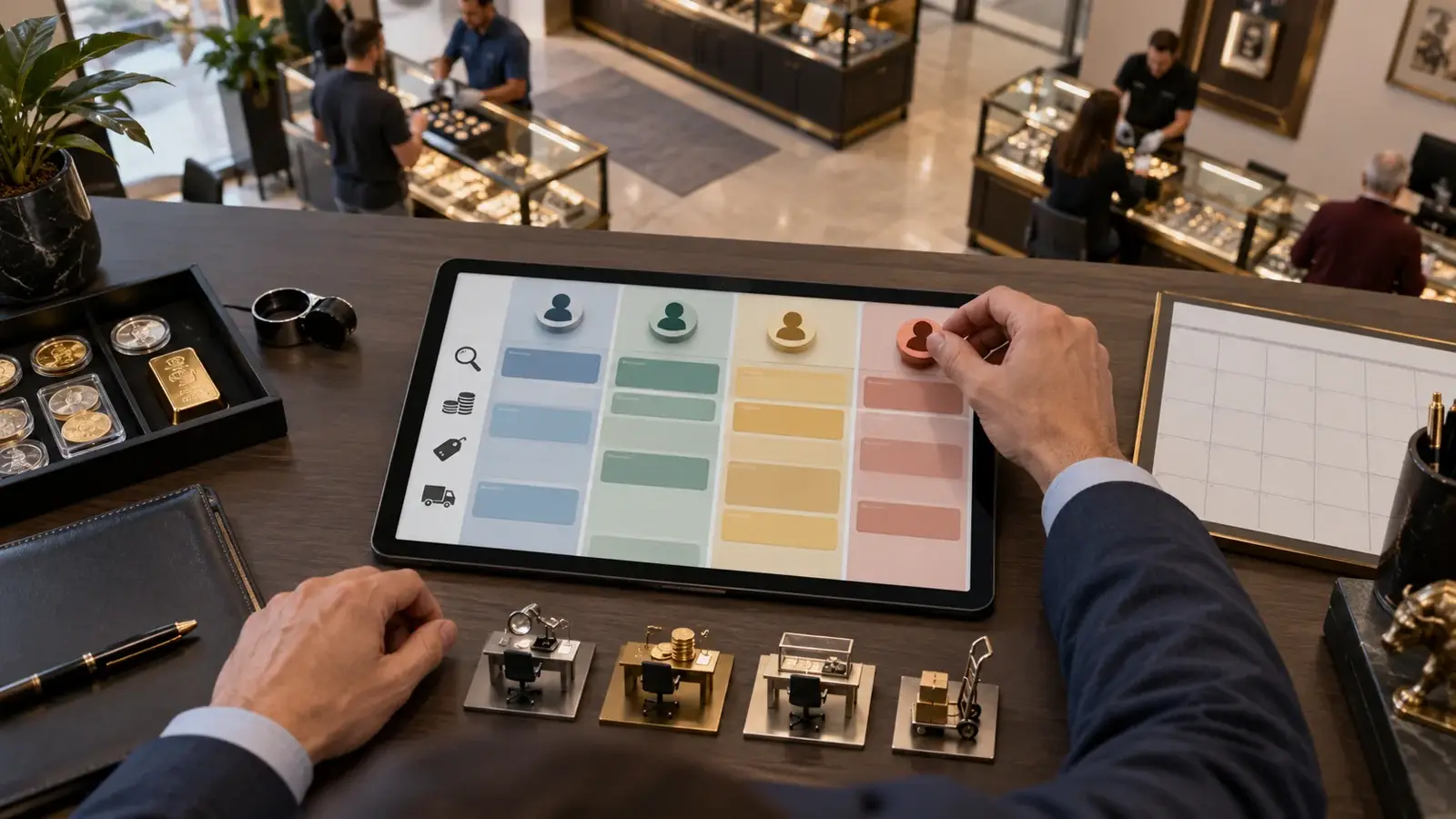
Prepare the day before it begins
The closing or opening team should review the next day’s schedule for resource conflicts, missing information, unusual values, repeat clients, authority requirements, product requests, special access, and pending payment. Assign the primary employee and backup. Confirm rooms, equipment, and secure capacity.
For a pickup, verify the order status and approved release procedure before inviting the customer to the counter; do not leave high-value property staged in an exposed area. For an intake, prepare a unique case record, labels, and clean tray only when appropriate. For an estate appointment, confirm the service scope and whether documents require secure review.
Send reminders with location, time, general preparation, rescheduling method, and a safe-contact number. Avoid putting sensitive product or value detail in an ordinary text notification. Ask the client to notify the shop if the scope changes substantially so the team can protect enough time and space.
Use a secure arrival and handoff
Check in the customer without announcing valuable contents to the room. Confirm the appointment and assigned employee. If property enters the shop, begin the appropriate custody process promptly rather than asking the client to leave containers unattended. For pickups, complete identity and authorization checks before showing or releasing the order.
Track arrival, service start, pauses, handoffs, and completion. If a client waits, the team should know which resource is blocking progress. If an appointment changes employee or room, transfer context and custody explicitly. A calendar assignment alone does not transfer responsibility for property already on the counter.
When the work cannot finish in the slot, choose a controlled outcome: extend without harming another secure appointment, schedule a continuation, accept custody under documented terms and location, or return the property. Do not rush a test, approval, count, or payment because the next event is starting.

Give walk-ins a defined lane
A walk-in process protects hospitality without breaking appointments. Train the front team to identify the general need, immediate security concern, approximate scope, and available resources. A quick service may proceed. A complex collection can receive a private triage, secure explanation, and scheduled appointment rather than an improvised evaluation in the lobby.
Reserve some flexible capacity based on observed walk-in demand. If it is consumed, give the customer honest options and a specific booking path. Record the inquiry and promised follow-up so the customer does not start over. Do not ask them to leave valuable property simply to hold a place in line.
Measure walk-ins that convert to same-day service, later appointments, referrals, or no fit. Repeated overflow at the same hour may justify a staffing or slot change. Repeated underuse may release capacity. The goal is a responsive system, not a philosophical preference for appointment-only or walk-in-only service.
Handle cancellations, late arrivals, and no-shows consistently
Publish clear, reasonable policies by service type. A short consultation and a multi-hour specialist block may warrant different notice. If deposits or fees apply, disclose terms before booking and follow applicable law and payment rules. Allow staff to record compassionate exceptions with approval rather than applying policy unpredictably.
When a customer is late, assess whether the remaining slot can support a safe complete workflow. Offer a reduced scope or reschedule; do not compress required testing and custody steps. Release reserved resources and staged items when a cancellation is final, and confirm that inventory availability returns to the correct state.
Follow up once after a no-show with a convenient rescheduling path if the customer permitted contact. Avoid an endless sequence. Track reasons such as reminder failure, unclear location, scope misunderstanding, market movement, transportation, or changed decision. Use patterns to improve the service rather than labeling every absence as disrespect.
Protect privacy and security in the calendar
Use neutral appointment titles on shared views. Limit notes about value, property, identity, estate status, and payment to authorized roles. Do not include safe combinations, transport routes, home security details, or full document numbers. If a third-party calendar synchronizes events, understand which fields leave the core system.
Give each employee only the locations and information needed. Log exports and sensitive changes. Remove former employees promptly and review temporary staff access. Set retention rules for canceled appointments and uploaded materials rather than keeping everything indefinitely.
Plan for outages. Staff need a secure, current day list with minimal necessary contact and resource information, plus a method to record arrival and later reconcile events. Do not promise full offline capability unless the tools actually provide it. Test the continuity procedure before a busy day exposes the gap.
Close every appointment with a next state
Use outcomes such as completed purchase, completed sale, evaluation performed, follow-up scheduled, waiting for customer, waiting for specialist, no fit, referred, canceled, or no-show. Add the linked transaction, property status, payment status, documents delivered, and next action. The appointment is not “complete” merely because time ended.
Finish operational work before the employee loses context: secure or return property, label locations, send the promised summary, assign follow-up, and note material preferences. If documentation must wait, create an owned task with a due time. Closing tasks belong in the service duration model.
For ongoing work, give the customer a clear expectation: who owns it, what is happening, what information is needed, and when the next update will occur. A confident close reduces incoming status calls and makes the next employee’s work easier.
Measure capacity and customer experience together
Track time to available appointment, booking completion, confirmation rate, no-shows, reschedules, arrival punctuality, wait time, service duration, closeout time, overruns, resource conflicts, walk-in waits, and follow-up completion. Segment by service type, location, time, and assigned role.
Add quality measures: missing intake evidence, property left unlocated, payment rework, customer complaints, repeat visits caused by incomplete work, and staff-reported rushing. A calendar can appear efficient while pushing risk into after-hours cleanup. Measure the whole workflow through controlled closure.
Review a sample of long and short appointments. A long event may reflect a poorly scoped booking or valuable thorough work. A very short event may be efficient or incomplete. Use evidence to adjust questions, duration, staffing, resource rules, and client expectations.
A 30-day scheduling redesign
- Week 1: Define service types, actual duration, buffers, outcomes, and security level.
- Week 2: Map staff, rooms, equipment, approval, vault, and staging constraints to each service.
- Week 3: Launch useful pre-visit questions, reminders, walk-in triage, and daily preparation.
- Week 4: Compare scheduled and actual flow, correct slot design, and add quality measures.
The right appointment slot reserves enough capability to finish the client’s work safely—not merely enough time to begin it.
Connect this workflow in bullionOS
Bring this operating process into one connected dealer record. Explore Coin Dealer Software & POS, or visit the bullionOS dealer operations resource hub for related guides.