
Client Engagement for Coin Dealers: Turn Every Appointment Into a Connected Relationship
LEDGER · August 4, 2026
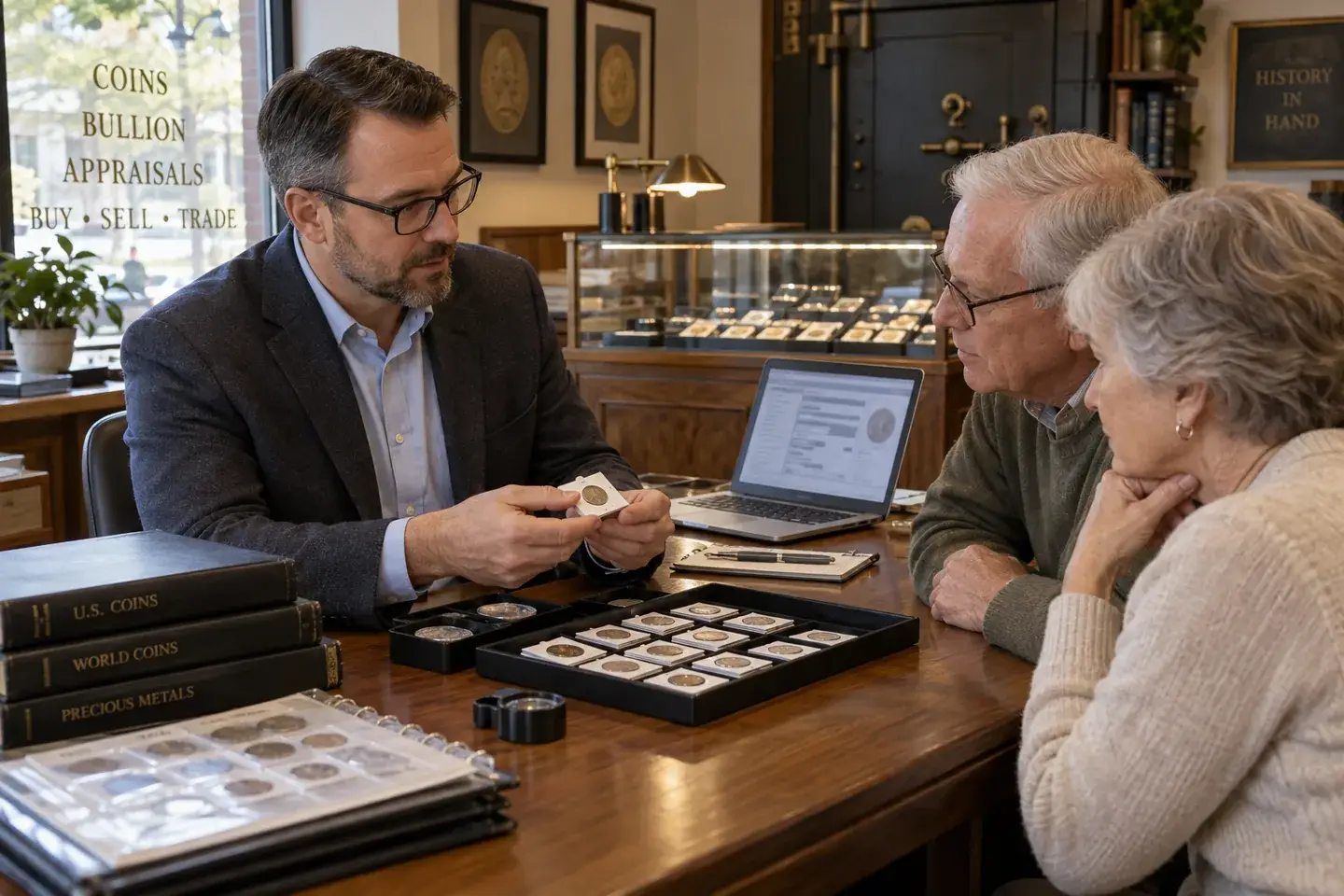
Great dealers often deliver that experience through personal knowledge. An owner recognizes a long-time collector’s interests. A staff member remembers that a client prefers sovereign gold. Someone knows which estate contact needs extra time and which bullion buyer wants a message when a particular product returns to stock.
That personal attention is a competitive advantage. But when the knowledge exists only in one employee’s memory, it does not scale. Vacations, turnover, busy counters, multiple channels, and growing client volume can make an excellent relationship feel inconsistent.
A purpose-built client system should not replace human judgment. It should give every authorized employee the context needed to exercise that judgment well. bullionOS connects client records with appointments, invoices, product history, messages, requests, portal activity, fulfillment, and marketing attribution so the relationship can continue across the dealership rather than restarting at each interaction.
A client record should be more than an address book
Many CRMs begin and end with contact fields. Name, email, phone, and address are necessary, but they do not explain the relationship. A coin dealership needs to know what role the client plays, what business has occurred, which items matter to them, what conversations are active, and what commitments are open.
In bullionOS, the client record can connect:
- Buyer, seller, or dual-role history
- Buy and sell invoices
- Items purchased from or sold to the dealership
- Quantities and product activity over time
- Appointments and their outcomes
- Messages, notes, and requests
- Shipment and fulfillment history
- Portal access and security status
- Lead source, journey, review, or outreach activity
- Lifetime transaction measures appropriate to the relationship
This creates a timeline with commercial meaning. When a client returns, staff do not need to ask the client to reconstruct every prior interaction. They can see the authorized history, verify what remains relevant, and continue the conversation.
The first discipline is simple: search before creating. bullionOS supports fuzzy client search so partial names and minor spelling differences are less likely to produce duplicate profiles. Duplicates are not a cosmetic problem. They split invoices, messages, appointments, and lifetime activity between records, making the relationship look smaller and less coherent than it is.
Company and individual relationships also need care. Wholesale dealers should be represented as company records, with contacts associated appropriately, rather than treated as ordinary retail clients. bullionOS distinguishes wholesale activity when calculating retail client averages so a high-volume dealer relationship does not distort consumer lifetime-value analysis.
Begin engagement before the client arrives
The appointment is one of the best opportunities to turn an inquiry into a prepared, confident visit. A generic calendar event captures time. A useful appointment record captures intent.
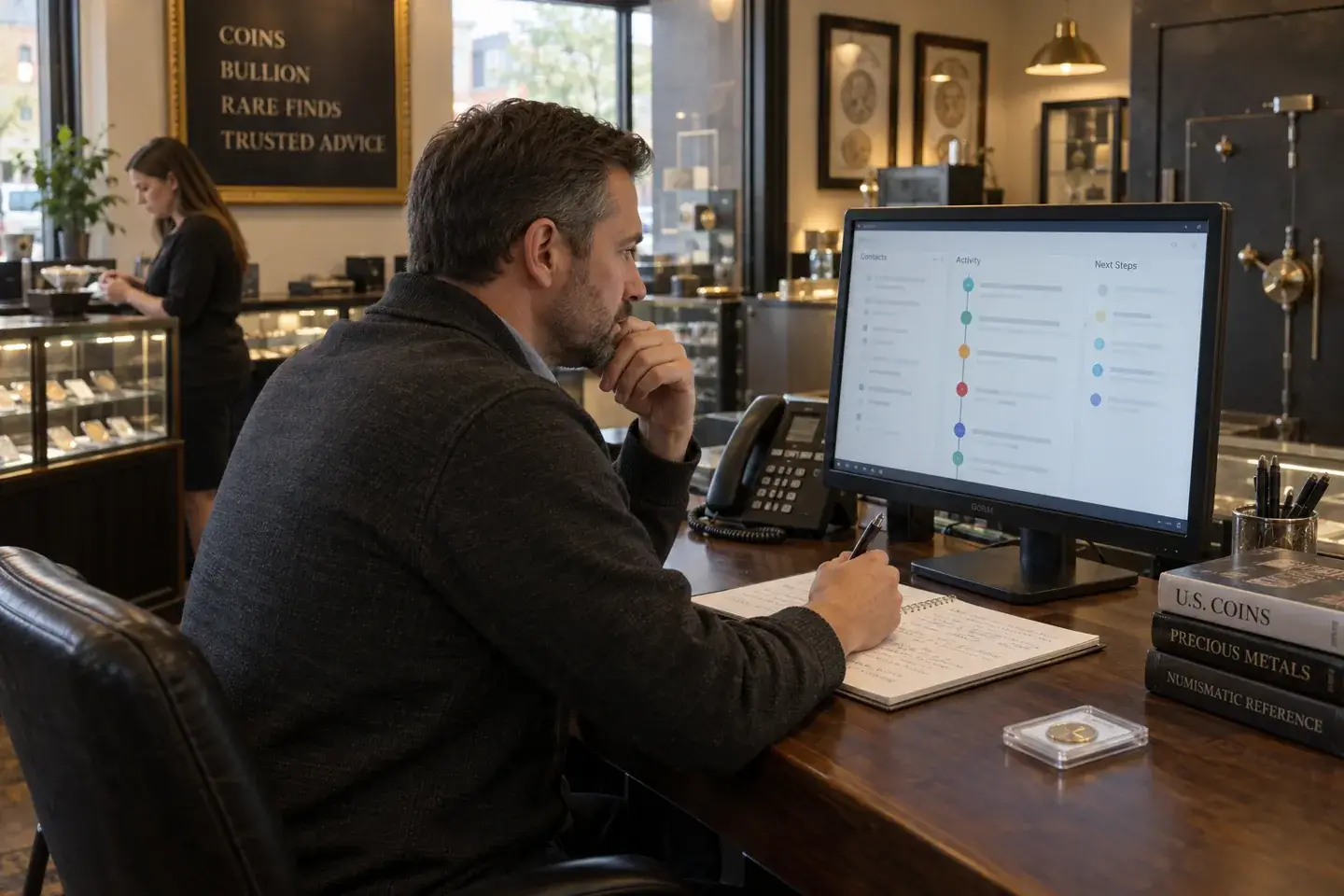
With the bullionOS Calendar, staff can identify whether the dealership expects to buy from the client, sell to the client, perform an appraisal, arrange a bullion pickup, or support another approved appointment type. The record can include the client, contact details, projected amount, expected line items, notes, metal focus, and reminder preferences.
This information improves both service and operations. If a client plans to sell a substantial gold collection, the team can prepare the right staff, equipment, private space, and liquidity. If a client plans to buy, staff can confirm availability and assemble likely products. If the appointment is for an appraisal, the time allocation and preparation message can reflect that service.
Public booking can respect actual business hours, enabled holidays, and custom closed dates. That reduces the frustrating experience of selecting a time the office cannot honor. On mobile, the booking experience can focus on the next practical open days rather than forcing a client to navigate a dense calendar.
The appointment also provides a secure preparation path. Clients can use their manage link to confirm, cancel, or request a different time. They can add notes or photos where the workflow permits, giving staff better context before arrival. A client preparing to sell can be reminded to bring identification and relevant item information; a purchase or pickup client can receive directions appropriate to the visit.
Engagement begins when the dealership demonstrates that it is already thinking about the client’s needs.
Use consent-aware confirmations and reminders
Timely communication reduces uncertainty and no-shows, but more messages are not automatically better. The goal is a high-signal journey: send the right information, through a permitted channel, at the moment it helps.
bullionOS supports appointment confirmation, reminder, cancellation, service-update, and post-appointment review journeys through configured email and text messaging. Text messages require an appropriate mobile number and opt-in. Clients can stop future text messages using standard opt-out instructions. Communication preferences remain part of the relationship rather than an assumption made by individual staff.
A practical appointment journey might include:
- An immediate booking confirmation with date, time, appointment type, directions, and a manage link.
- A reminder near the appointment with preparation guidance specific to the visit.
- A status message if the appointment is rescheduled or canceled.
- A post-visit follow-up or review request at the appropriate time.
The manage link matters because it gives the client agency. A person who can confirm, cancel, or request a new time without a phone call is more likely to keep the dealership informed. Staff, in turn, see the current appointment state rather than discovering a cancellation when the client fails to arrive.
Every message should remain tied to the record that caused it. Sending from the correct appointment or client context preserves history and attribution. It also reduces the risk that a convenient email address becomes disconnected from the actual relationship.
Prepare the team with a shared view
An appointment has client-facing and internal value. Internally, it becomes planned work. The bullionOS Daily Control Center and appointment forecast can show expected purchases as projected cash out and expected sales as projected cash in. Managers can compare planned activity with liquidity, staffing, and other daily obligations.
For larger purchase appointments, bullionOS can evaluate projected liquidity against an operating reserve policy. If the expected outflow would push available funds below a configured floor, the system can warn or block normal scheduling according to the dealership’s controls. An owner may override when authorized, but the reason is recorded.
This is client engagement in an operational sense. A warm confirmation message is not enough if the dealership is unprepared to fund the transaction. Connecting the appointment to liquidity helps the business make promises it can keep.
The arrival process can also use current appointment context. Staff can see upcoming clients and prepare the correct record before the conversation begins. Instead of asking, “Have you worked with us before?” while searching several systems, the employee can confirm identity and open a coherent history.
Preparation creates the impression of memory. A connected system turns that impression into a repeatable team capability.
Carry the same context into the transaction
The client experience often breaks at the point where appointment software hands off to invoicing. Notes are copied manually, the client is searched again, and the resulting invoice has no clear link to the original intent.
bullionOS connects the appointment and invoice workflow. At the visit, staff can begin from the client record and create the appropriate buy or sell invoice. The invoice becomes the financial and item-level truth of the transaction, preserving the products, quantities, prices, metal details, payment method, notes, and status history.
Once completed, the transaction can be connected back to the appointment as actual activity. bullionOS can match an invoice safely when it is directly linked or when there is a single unambiguous same-client, same-type, same-day candidate. If several appointments might match, staff should choose the correct relationship rather than forcing automation.
This enables projected-versus-actual reporting. The dealership can see whether scheduled opportunities became realized business and for how much. Marketing and operations gain a more useful funnel than a count of bookings alone.
From the client’s perspective, continuity matters. The information discussed before arrival should inform the transaction. The finalized invoice should become available through the appropriate delivery or portal path. If fulfillment follows, shipment details should connect to the same history. The client should never feel that each department is meeting them for the first time.
Use product history to make outreach relevant
Generic blasts are easy to send and easy to ignore. Relevant outreach begins with transaction history.
bullionOS can show which clients bought or sold particular products and quantities over time. Staff can search product history to identify relationships with genuine interest. A dealer receiving a sought-after product could review prior buyers. A client who regularly sells a certain type of material may be a good fit for a tailored conversation. An estate contact may require a different journey from an active bullion trader.
The purpose is not to make every conversation algorithmic. It is to replace guesswork with context. Before reaching out, an employee can see whether the client’s history supports the message, review recent contact, and avoid repeating an offer that was already declined or completed.
Segmentation should also respect role and consent. Buyer, seller, and dual-role tags should reflect actual activity. Wholesale relationships should not be placed into retail campaigns merely because they share a product. Email and text preferences must be honored. Sensitive financial and personal details should remain visible only to authorized roles.
When outreach is connected to source and outcome, the dealership can learn which activities produce appointments and invoices. Sources and attribution can link leads and revenue to their origin. Customer journeys can connect audience, message, response, and later activity. That makes marketing accountable without reducing the relationship to a single last-click metric.
Give clients a secure self-service channel
Clients often want information outside business hours: an invoice copy, a shipment update, a prior transaction, a current quote, or a way to send photos before visiting. If the only option is to call, staff become the manual interface to information already stored in the business.
The bullionOS client portal gives approved clients a private view of their own relationship. Depending on enabled workflows, clients can access transactions and invoice PDFs, live pricing, time-limited locked quotes, in-stock items, deal requests with photo uploads, shipment tracking, messages, portfolio information, and security settings such as two-factor authentication.
Self-service does not mean giving up control. The portal is role-separated from staff operations. Clients see their permitted records, while sensitive internal notes, costs, approvals, and other clients’ information remain protected. Portal access can be enabled, disabled, or reset through authorized administrative controls.
Deal requests are particularly useful in the coin trade. A client can describe an item or collection and attach photos. Staff receive a queue with the client context and can reply within the thread. The photos do not replace in-person authentication or evaluation, but they help the team prepare and decide the next step.
The portal also creates continuity after the transaction. A client can retrieve documents and follow a shipment without waiting for an employee to re-send information. This reduces repetitive service work while increasing transparency.
Keep fulfillment part of the relationship
A sale is not complete in the client’s mind when the invoice is marked paid. It is complete when the product is received or ready for pickup as promised.
bullionOS connects fulfillment to the invoice or online order. Pickup orders can move to a ready state and trigger the appropriate notification. Shipped orders can use configured carrier and label workflows, preserve tracking events, and provide links to the carrier’s tracking page. If a carrier integration is unconfigured or unhealthy, operational intelligence can surface that condition rather than silently implying that automation is working.
This matters because shipping updates are client engagement. A correct tracking message builds trust. A delayed or contradictory message creates anxiety, especially when the package contains high-value material. By keeping shipment records, status events, and client communication connected, the dealership can answer questions from the actual fulfillment record.
Online orders should follow the same principle. A retry-safe event can create the client and invoice once, preserve the original order time, and route the order toward pickup or shipping. The dealership avoids a separate “online customer” silo and gains a unified view of the client across counter and web activity.
Measure relationship value without losing the person
Lifetime value can help a dealer prioritize service and understand the client base, but the metric must be used carefully. A high lifetime total does not automatically describe future opportunity, relationship quality, cost to serve, or client preferences. A newer client with a modest first transaction may become an important long-term relationship.
bullionOS gives authorized staff access to lifetime purchase and sale measures, item history, appointment activity, and the supporting invoices. The supporting records matter more than the summary number. Staff should be able to drill into the activity rather than treating a score as a verdict.
The system also separates wholesale behavior from retail client averages where appropriate. Without that distinction, one dealer account can make ordinary client benchmarks meaningless.
Useful relationship questions include:
- How often does the client transact, and on which side of the trade?
- Which products or metals are most relevant?
- What was the most recent appointment or conversation?
- Are there open requests, quotes, shipments, or support issues?
- Which source or referral began the relationship?
- Has the client given permission for the planned communication channel?
- Has the dealership delivered consistently on prior commitments?
These questions turn client data into preparation rather than surveillance. The standard should be simple: use the information to serve the relationship, restrict access appropriately, and preserve the history accurately.
Create a repeatable engagement rhythm
A connected system is most effective when the team follows a consistent rhythm.
Before the appointment
- Search for the client before creating a new record.
- Confirm appointment type, projected amount, items, notes, and communication preferences.
- Review the client’s relevant product and transaction history.
- Send a confirmation and preparation guidance through an approved channel.
- Check inventory, staffing, and liquidity for the expected transaction.
During the visit
- Work from the existing client and appointment context.
- Add notes where the interaction occurs instead of keeping a separate private list.
- Build the correct buy or sell invoice and review products, quantities, prices, payment, and terms before completion.
- Use authorized overrides only with a reason.
- Explain the next step: payment, Cage receiving, pickup, shipping, or follow-up.
After the visit
- Link the invoice to the appointment when it is not safely matched automatically.
- Deliver invoice or portal access through the approved path.
- Trigger pickup or shipment communication from the fulfillment record.
- Send a review or follow-up request at the appropriate time.
- Resolve open requests and record the outcome.
- Use relevant history—not a generic list—when planning future outreach.
At management review
- Compare projected appointments with realized invoices.
- Review confirmation, cancellation, and no-show patterns.
- Examine sources and journeys that lead to meaningful business.
- Review unresolved client requests, messages, shipment exceptions, and complaints.
- Check that consent and access controls are being respected.
This rhythm makes engagement a managed operating process without making it feel scripted to the client.
One relationship, one connected history
Coin dealing is a relationship business because trust compounds. Clients return to the people who recognize them, explain the transaction, protect their information, communicate clearly, and follow through. The challenge is preserving those qualities as the dealership becomes busier and more complex.
bullionOS helps by connecting the relationship to the work: appointments, projected needs, reminders, invoices, product history, messages, requests, portal access, fulfillment, reviews, and attribution. Each employee can begin with the relevant context. Each message can remain tied to the record that caused it. Each summary can lead back to supporting activity.
The result is not automated friendliness. It is operational continuity—the ability for the dealership to remember accurately, prepare intelligently, and deliver consistently across every channel.
Ready to see how bullionOS can connect your client journey from first booking to repeat business? Request a private walkthrough at bullionos.co.