
Bullion Returns, Refunds, and Canceled Price Locks: An Exception Workflow
LEDGER · July 19, 2026

Begin by naming the event correctly
Bullion and collectible transactions do not behave like ordinary retail returns. Market prices move, seals and holders matter, identity and authenticity must be re-established, payment methods have reversal rules, and a dealer may have reserved inventory or offset exposure when the customer committed. The workflow must first determine what happened.
A return means property previously delivered to the customer is coming back. A refund means the dealer is sending money back or reducing an amount owed. A cancellation ends an order or purchase before completion. A price-lock cancellation addresses a market commitment and may have consequences even if neither metal nor money moved. A correction fixes an internal error. A chargeback is initiated through a payment channel and follows its own evidence timeline.
Give each event a linked record and status. One case can contain several events, but none should disappear inside a generic note. The original invoice, purchase, quote, lock, payment, item identifiers, fulfillment, customer, approval, and communications should remain connected.
Write terms before the exception occurs
Customer-facing terms should explain which products or services may be returned or canceled, deadlines, condition and packaging requirements, market-sensitive price locks, fees or market-loss treatment if applicable, shipping responsibility, inspection, refund timing, and dispute contact. Present the relevant terms before commitment and preserve the version accepted.
Internal policy should translate those terms into permissions and steps. Define who may accept a physical return, determine eligibility, inspect authenticity, approve a refund, waive a term, cancel a lock, release inventory, and communicate a denial. Set thresholds for second-person review and legal or management escalation.
Consumer, contract, payment, tax, privacy, and precious-metals rules vary by jurisdiction and channel. Card networks, banks, marketplaces, and payment processors may impose additional requirements. Have qualified counsel and payment advisers review the policy. This article describes an operating record; it does not establish whether a particular return, fee, or cancellation is legally permitted.
Open the exception from the original transaction
Staff should begin with the existing transaction, not a blank refund form. Confirm the customer or authorized representative, original item or lot, sale or purchase date, payment, delivery, price lock, terms version, and previous exceptions. Assign a case number, owner, requested resolution, channel, and time received.
Capture the customer’s explanation factually. Do not promise approval before eligibility and physical condition are assessed. Explain the next step and expected timing. For shipped material, issue controlled instructions and any required authorization; an unexpected package should not enter ordinary receiving without context.
Place a hold on conflicting actions. If the customer reports a shipment problem, prevent an automatic replacement or refund until the appropriate review. If a price-lock cancellation is pending, prevent fulfillment and offset changes that would compound exposure. If an item is expected back, show it as return expected—not on hand.

Separate eligibility from inspection
Eligibility asks whether the request fits the applicable terms and law: time window, product class, delivery status, customer, reason, prior authorization, and required documentation. Inspection asks whether the physical item is the same item, authentic, complete, and in the required condition. A case can pass one and fail the other.
Use a checklist specific to product type. Record packaging and seal condition, item identifiers or serials, quantity, gross weight where useful, holder or certificate, visible damage, included accessories, and images. Compare against the outbound pick, verification, packing, and delivery evidence. Use approved authentication and test methods; a visual resemblance is not sufficient for a high-value return.
If packaging must be opened for inspection, document who authorized and performed it and preserve the before-and-after condition. Conflicting or inconclusive tests route to quarantine and specialist review. The receiving employee should not be pressured to approve the refund simply because the customer is waiting.
Quarantine first, then decide disposition
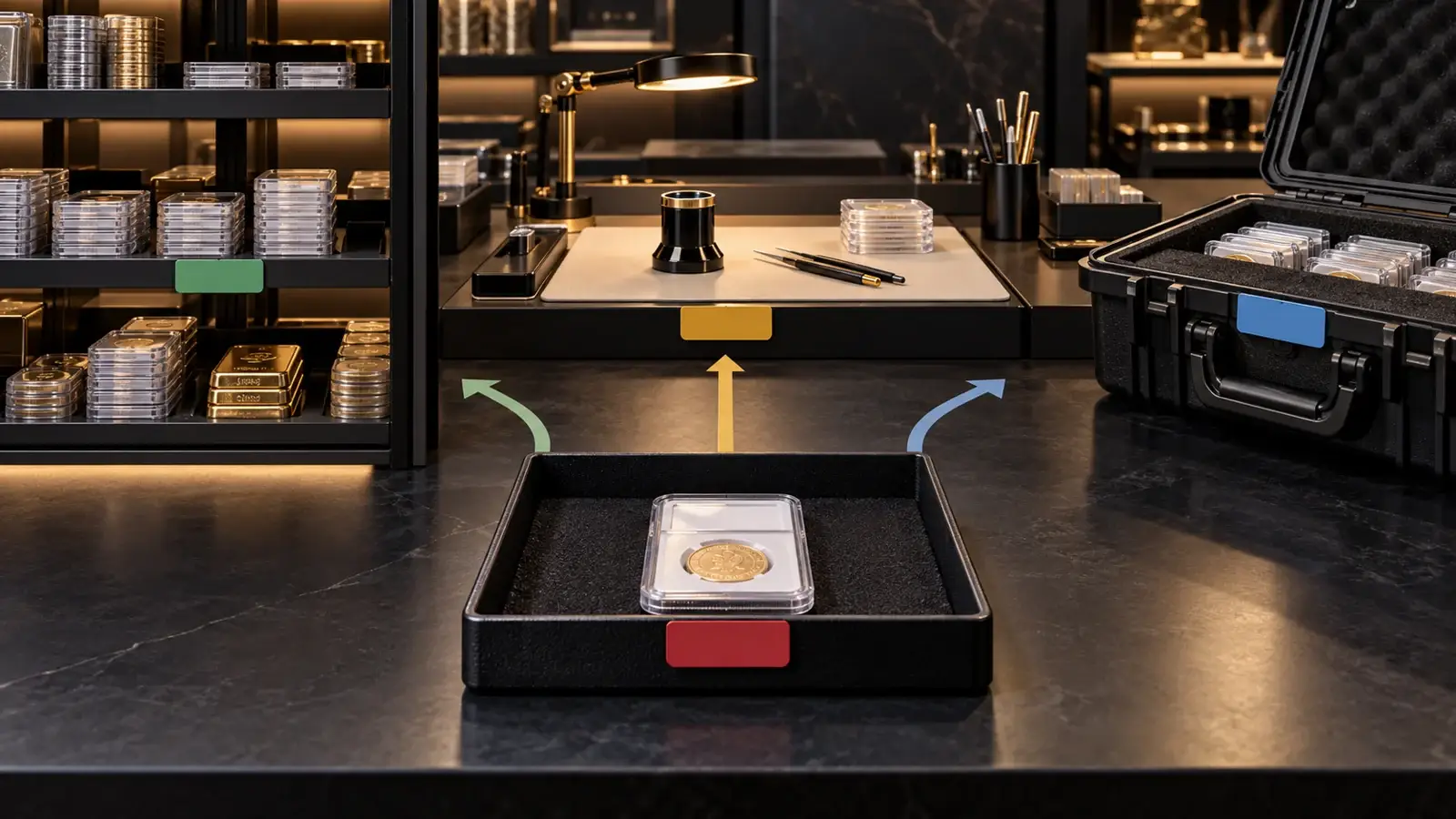
Returned precious metals should enter a dedicated, labeled quarantine location. Do not restore availability at the receiving counter. Record the person accepting custody, time, package condition, item or lot identifier, and quarantine bin. If the item arrived by carrier, preserve the package, label, tracking, and damage evidence until the case is resolved.
Keep customer-owned, disputed, and dealer-owned returned property distinct. The dealer may physically possess an item while ownership or refund remains unresolved. Status names should reflect that reality. Permissions should prevent a quarantined unit from being sold, transferred, refined, or used to fulfill another order.
Use two-person verification for high-value or disputed returns. If the count or serial differs, record the observation rather than changing the expected record. Notify the case owner and follow the incident procedure. The quarantine queue should be reviewed daily because delays affect customers, cash, and usable inventory.
Calculate the proposed resolution transparently
The case record should distinguish original sale amount, taxes, shipping, fees, discounts, loyalty credits, payment amount, refunds already issued, and the amount proposed now. If terms allow a restocking, processing, shipping, or market-related adjustment, show the rule, calculation, and approval. Do not invent a deduction after seeing current spot.
For a market-sensitive transaction, preserve the original lock inputs and the reference value at the exception decision. Show any inventory reservation, supplier order, or offset connected to the commitment. The treatment of market movement must follow the accepted terms, law, and dealer policy; the system’s job is to make the inputs and decision visible.
When the shop made the error—wrong item, quantity, price, duplicate charge, or failed delivery—identify the correction separately from any discretionary accommodation. This helps managers distinguish service recovery from customer-driven cancellation and correct the upstream process.

Approve before moving money
Define approval based on amount, reason, product, payment method, return condition, policy deviation, customer identity, price-lock impact, and fraud indicators. The person who received the item may record inspection but should not unilaterally approve a significant refund they also release. A waiver outside policy needs an authorized approver and reason.
The approver should see original transaction, accepted terms, customer request, eligibility result, inspection evidence, financial calculation, payment history, inventory status, and any market or offset effect. Approve the exact version. If the proposed amount or destination changes, invalidate the approval.
Record denied and partially approved cases with a customer-ready explanation reviewed for accuracy and tone. Preserve internal security or suspicious-activity information separately where disclosure would be inappropriate. Provide the customer a clear contact path for questions or escalation.
Refund through a controlled payment path
Whenever policy and payment rules require, return funds to the original method and original payer. Changes to destination—such as a different card, bank account, person, or mailing address—are high-risk exceptions requiring verification and stronger approval. Do not use instructions from an unverified email or text alone.
Keep refund proposed, approved, submitted, processed, settled, failed, canceled, and replaced as separate states. Store the processor or bank reference without exposing full account data to unnecessary users. A button click is not final settlement. Reconcile the expected refund with the external payment source and bank.
If a refund fails, do not issue a second one until the first status is understood. Link replacement payments or checks to the failed attempt. If a refund and a new sale occur together, record both economic events rather than netting them into a mysterious difference.
Cancel price locks without erasing them
The lock record should preserve product, quantity, side, reference source and time, premium, total, expiration, acceptance, terms, and customer. When cancellation is requested, record who requested it, when, why, and what obligations already exist. The state becomes cancellation pending; it does not return to an unaccepted quote.
Review reserved inventory, expected inbound metal, supplier transactions, approved offsets, payment, fulfillment, and current reference movement. The authorized resolution might honor, cancel under terms, waive an amount, reprice with customer agreement, substitute, or escalate. Record the calculation and communication. Do not modify the original price to match the resolution.
Close every downstream obligation. Release or reassign inventory; cancel or reconcile supplier orders; address the approved offset; reverse or refund payment; update customer order; and recognize the result according to accounting policy. A canceled lock with an open offset is still an open operational problem.
Choose and record final item disposition
After approved inspection, route the physical item to return-to-stock, reserved inventory, rework, grading or authentication, repair, supplier return, customer return, claim evidence, scrap or refining, or another authorized state. Each destination needs a specific location and custodian. A refund can settle before item disposition, but the case remains physically open.
For return-to-stock, require confirmation that identity, authenticity, quantity, condition, packaging, and any hold requirements support sale. Recalculate cost according to accounting policy, including nonrecoverable fees or rework where appropriate. Preserve the prior sale and return history in the item record.
If the item will be returned to the customer, document packaging, carrier or pickup, identity and authorization, tracking, delivery, and custody handoff. If retained as evidence, control access and retention. Do not leave an exception item in a general desk drawer after the money side is closed.
Recognize patterns without accusing customers
Review repeated returns, mismatched serials, empty or substituted packages, unusual destination changes, rapid buy-return cycles, refund failures, multiple identities, chargebacks after delivery, and exceptions across locations. These are review signals, not automatic conclusions. Apply consistent, lawful investigation and nondiscrimination practices.
Limit access to fraud and dispute notes. Keep observations factual and sources clear. Do not place sensitive suspicion labels in ordinary customer-facing notes. Preserve evidence according to legal and payment timelines, and involve qualified counsel, payment partners, carriers, insurers, or law enforcement when the defined process requires it.
Also look inward. Repeated “customer error” may originate in misleading product descriptions, rushed packing, stale pricing, weak confirmation, confusing terms, or poor delivery communication. A fair exception review tests both sides of the workflow.
Reconcile the complete case
Before closure, confirm customer request, approval, refund or amount due, payment settlement, tax treatment, item identity, ownership, quarantine release, final location, inventory availability, offset or supplier obligation, shipping, customer communication, and accounting entries. Every event should point back to the original transaction and case.
Daily reports should show return expected, received not inspected, inspection exception, approval pending, approved not refunded, refund unsettled, item disposition pending, price-lock cancellation with open exposure, and chargeback deadline. Age each stage and assign an owner.
At month end, reconcile refund totals to processor, bank, invoices, and general ledger; returned units to inventory; write-downs to approvals; and canceled locks to exposure records. Corrections should post as linked events, not edits to closed history.
Use exceptions to improve the business
Track request rate, approval rate, reason, product, channel, employee, time to first response, inspection time, refund settlement, item disposition time, fee and market impact, recovered value, chargebacks, repeat cases, and policy overrides. Measure customer complaints and reopened cases alongside speed.
Review root causes: product quality, description, pricing, picking, packing, carrier, identity, payment, customer expectation, staff promise, system issue, fraud concern, or unknown. Assign corrective action and verify it happened. A recurring exception is a process, even if the manual calls it unusual.
Keep the customer experience humane. Give one owner, explain the next step, meet update promises, and separate necessary verification from defensive language. A controlled process can be both firm and respectful.
Exception-control checklist
- Open from the original transaction and name return, refund, cancellation, or correction.
- Verify eligibility, receive into quarantine, and document independent inspection.
- Calculate the proposed resolution from accepted terms and visible inputs.
- Approve the exact amount and method before releasing money.
- Close reservations, exposure, payment, shipping, and final item disposition.
- Reconcile external settlements and use root causes to improve the normal workflow.
An exception is closed only when the customer, metal, money, exposure, and ledger all tell the same story.
Connect this workflow in bullionOS
Bring this operating process into one connected dealer record. Explore Bullion Dealer Software for Inventory & Pricing, or visit the bullionOS dealer operations resource hub for related guides.